Best Reservation Software 2026: 7 Tools Compared
Compare the best reservation software for restaurants in 2026: pricing, integrations, ease of use, and which tool fits your venue type and budget.
Friday, 19:15. A 40-cover room is full on paper, two walk-ins are waiting at the door, and a party of six is 20 minutes late. The host has a phone in one hand, a paper list in the other, and no clear answer on whether that corner four-top can turn in time for the 20:00 booking. That gap between booked seats and seats that get used is where the best reservation software earns its fee, or doesn't.
This comparison judges seven tools on cost per busy shift, setup time, no-show protection, and the venue type each one fits. Marketplace reach, a large feature list, or a polished widget matters less if the host still has to rebuild the floor plan by hand at peak. Features, pricing models, ease of use, integrations, and scalability are covered for each tool, then matched to fine dining rooms, bistros, brunch venues, bars with seated service, and multi-location groups.
Discovery plays a part too. Guests who can see the room before they book make faster decisions, and the Virtual Tour Easy restaurant tour guide covers how virtual tours support that first impression. Once a guest clicks book, though, the operational work starts. The tools below handle that work very differently.
Table of Contents
- 1. 10seat
- 2. OpenTable for Restaurants
- 3. Resy
- 4. SevenRooms
- 5. Tock
- 6. Toast Tables
- 7. Eat App
- How the Seven Reservation Platforms Compare on Price, Free Access, and Fit
- Choosing the Right Platform Before Your Next Busy Service
1. 10seat
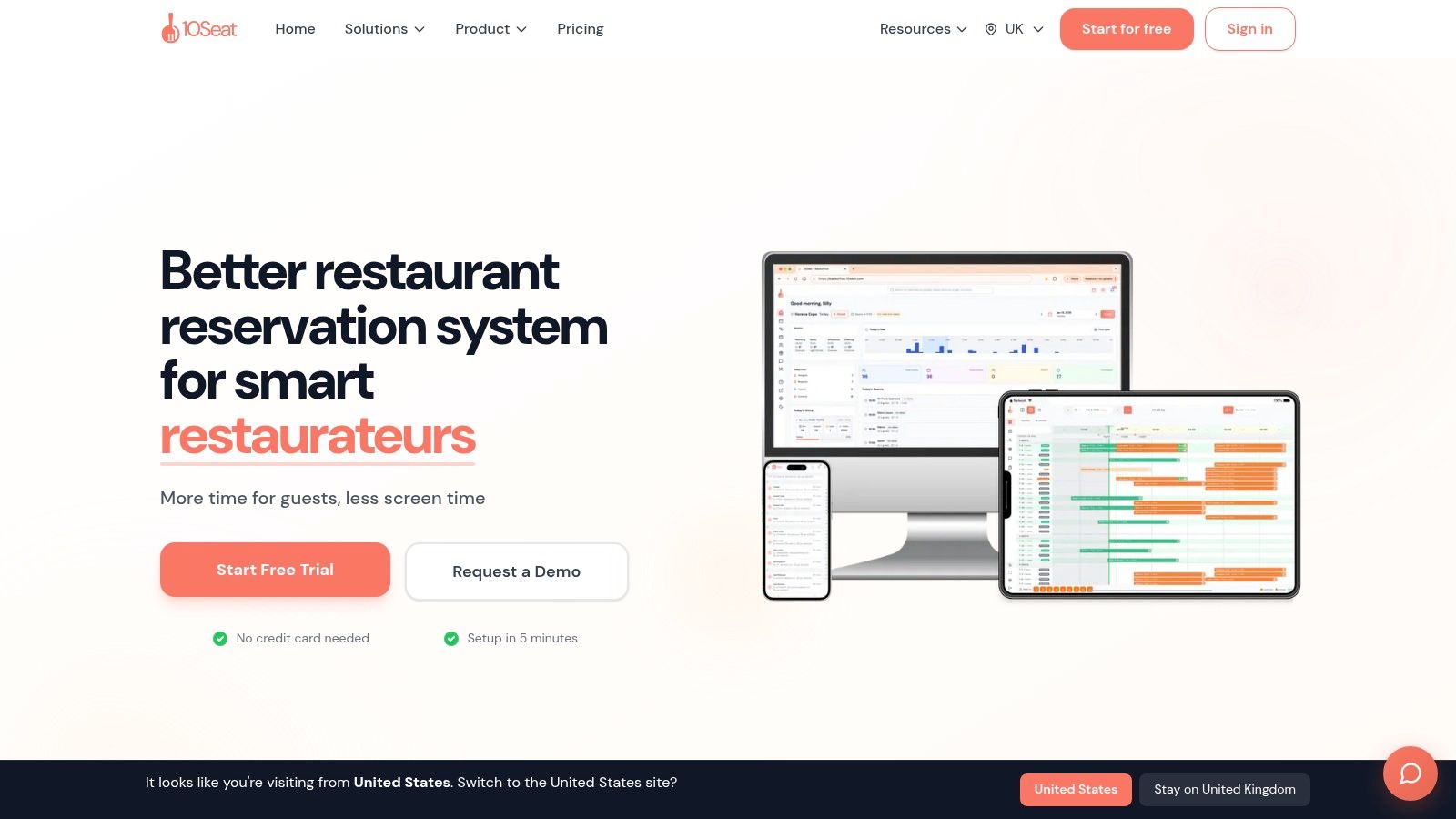
For an independent restaurant with steady direct demand, the busy-shift question is how many covers the existing floor can handle without adding manual work. 10Seat is a restaurant reservation system built to help fill tables faster and reduce no-shows. Its Capacity Engine combines Smart Auto Seating, Auto Seating Puzzle, and Walk-in Squeeze to optimize table assignments and manage walk-ins alongside reservations.
What it does during service
Guests can book through the restaurant's website or booking link, with the venue controlling availability, timing, and party sizes. Smart Auto Seating maps online bookings to an efficient table configuration without manual assignment. Hosts manage tables and bookings with staff apps, while managers control pacing and availability to balance the dining room and kitchen.
The platform includes Reservations management, Guest CRM, Review management, and a Host app. A visual reservation timeline shows upcoming arrivals, and booking confirmations and reminders are sent automatically. Guest profiles can record preferences and special occasions. The booking page can be used on a website or shared by link, and native iOS and Android apps let guests make reservations.
Setup takes five minutes. 10Seat says it migrates an existing reservation system in 15 minutes, without a third-party platform or lost reservations. Restaurants using 10Seat see 30% more reservations, 40% fewer no-shows, and 10 to 15% more covers per busy shift. Treat those figures as a benchmark to compare with your own booking and service records, not a guaranteed result. For a practical trial, track walk-ins turned away and tables left empty during a busy shift, then compare how the floor is used.
Practical rule: Judge capacity tools on your busiest Friday, not a quiet Tuesday demo. Count walk-ins turned away and tables held empty for late parties, then run the same shift in the software.
Cost and fit
10Seat takes zero commissions on reservations, a useful fit for Benelux independents that rely on direct bookings rather than a US-style marketplace. The free On the House plan covers up to 50 covers per month. For fine dining, structured guest intake can capture dietary needs, special occasions, and expectations before arrival. Bistros and brunch venues with heavy walk-in trade are better suited to Walk-in Squeeze, which helps manage walk-ins alongside booked tables. Choose 10Seat when table use and service flow matter more than marketplace reach.
2. OpenTable for Restaurants
For a city-centre restaurant with quiet weekday services, marketplace discovery can justify the cost of OpenTable for Restaurants. The platform combines reservations and table management with a diner-facing marketplace and distribution through more than 100 booking partners. That reach can help a new venue or tourist-area restaurant attract diners who might not find its direct booking page.
The operating tools cover floor plans, table assignment, inventory, online and in-house waitlists, guest profiles, and messaging. Eligible plans offer deposits and credit card holds, while Experiences supports ticketed menus and events. For peak services, card holds add a step for guests and staff, but give the restaurant a way to protect bookings against no-shows.
The trade-off is how guests find you. A venue taking a large share of bookings through the network may pay cover fees on diners it could have attracted directly. A loyal neighbourhood bistro should compare those fees with the value of new marketplace demand before choosing a plan.
What a busy shift costs
OpenTable uses subscription plans, with additional cover or prepayment fees. The Basic plan has more limited features than Core and Pro, so compare the included tools and likely booking mix, not just the subscription. The cost per busy shift depends on how many covers come through the network and whether guests pay in advance.
- Best fit: City venues, hotel restaurants, and new openings that need marketplace discovery.
- Weak fit: Neighbourhood bistros with a loyal direct audience, where cover fees can apply to bookings they might have secured themselves.
- Setup note: Plan costs depend on subscription, network bookings, and any prepayment fees. Compare those against the expected value of new demand before committing.
3. Resy
Say a busy upscale bistro takes 1,200 covers a month and hates per-cover billing. Resy answers that directly, since its standard reservations don't carry a per-cover fee according to its pricing information. Published plans range from $289 to $459 per month, so cost per busy shift stays predictable even when booking volume climbs.
Resy pairs reservation and table management with a diner-facing booking app and walk-in waitlists. Guests can set alerts for newly available tables, which helps backfill cancellations without host effort. Deposits and cancellation policy tools, event ticketing, and prepayment options cover the revenue-protection side. POS integrations, analytics, and guest insights sit on higher plans.
That cancellation handling is not a minor feature. A 2025 academic review citing OpenTable data reported that 28% of restaurant reservations in the United States were not honored during the preceding year. An empty reserved table also blocks walk-ins, so alerts that refill a cancelled slot within minutes protect two revenue streams at once.
Trade-offs to check
Plans start at a substantial monthly cost for smaller venues, and prepayments plus payment processing add fees on top of the subscription. POS support needs confirming before signing, since the value drops if the existing till doesn't connect. Resy suits chef-led and upscale casual rooms in larger cities where its diner audience is active. A rural brasserie with mostly phone bookings pays for reach it can't use.
4. SevenRooms
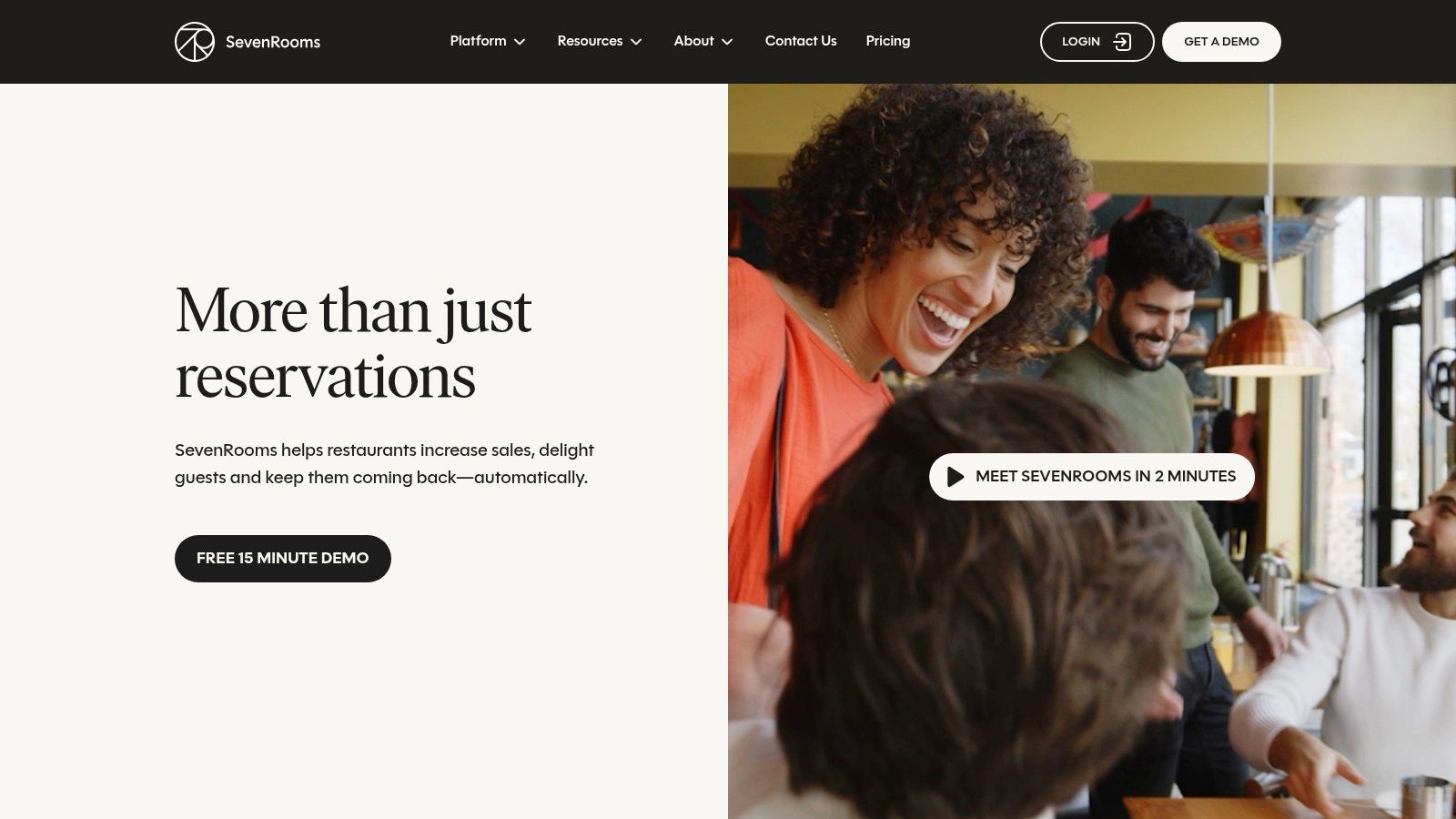
SevenRooms sells the guest relationship, not just the booking. SevenRooms combines reservations and table management with guest CRM, marketing automation, and reputation management, aimed at operators who want first-party data working across every visit. Branded reservations, waitlists, guest profiles, tags, and segmentation feed targeted campaigns, and multi-venue widgets plus ticketed events sit on higher plans.
That data-first approach matches where the industry is heading, since reporting on Qu's survey of 170 brands representing 85,000 U.S. locations found enterprise brands identified direct, first-party digital channels as a top revenue growth driver for 2025. The catch is friction. A separate survey covered in that reporting found 59% of customers might never return after complicated ordering or payment experiences. More profile fields and more automation only help if booking stays fast.
Personalisation earns its place when it reduces effort for the guest and the host. A profile that adds a form and a login does the opposite.
Operators weighing that balance can compare approaches in this guide to guest management software, which covers what guest data is worth collecting. SevenRooms also lists access to DoorDash and Deliveroo reservation marketplace users with no cover fees, which softens the direct-only trade-off.
Cost and fit
Starter, Growth, and Premium packages are quote-based, and optional add-ons for events, marketing, and voice tools move the total. That makes cost per shift impossible to verify without a sales call. Multi-location groups and hospitality brands with a marketing function get the most from it. A single 40-cover bistro likely pays for CRM depth that nobody on the team has time to run.
5. Tock
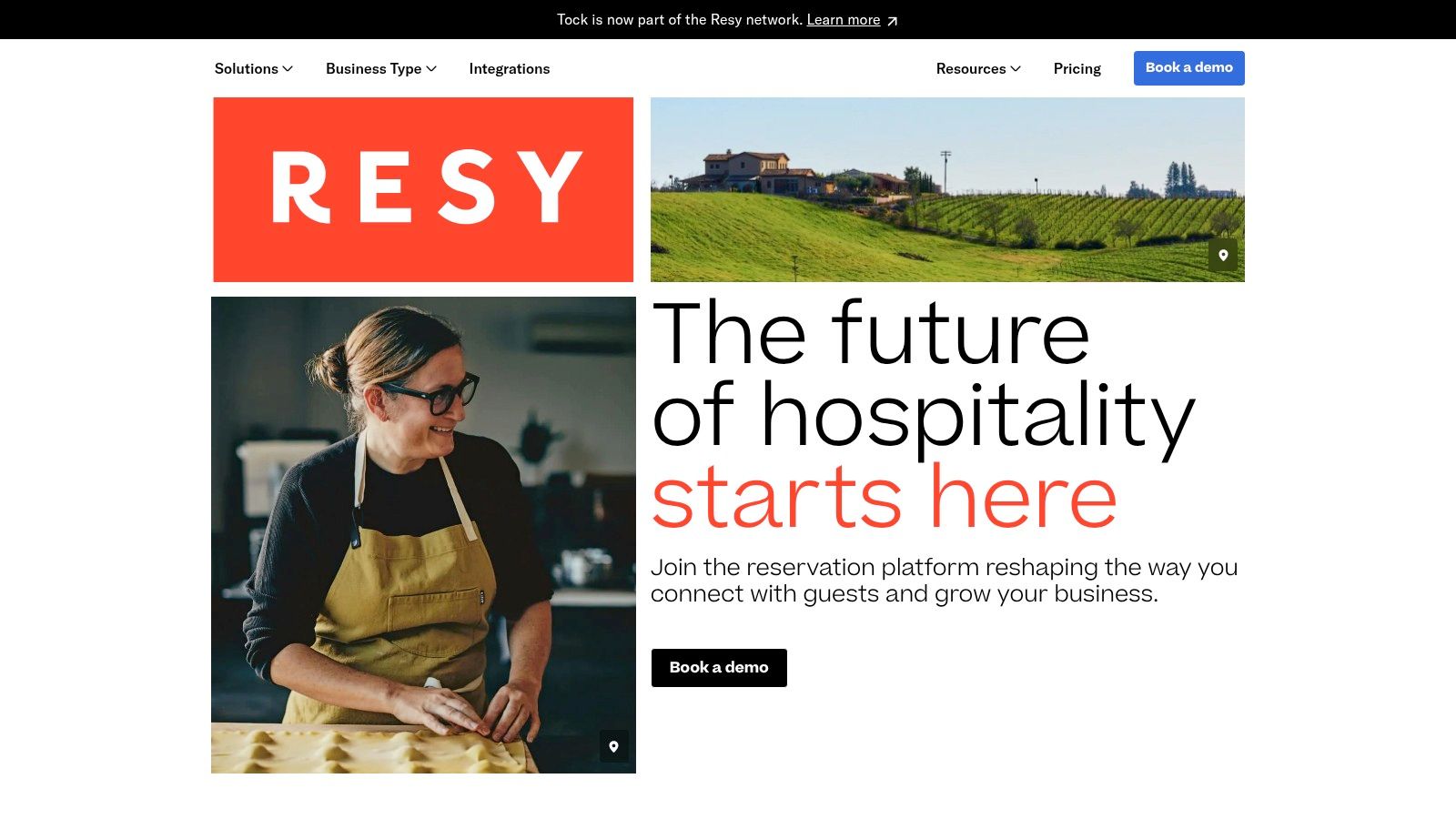
A 24-seat tasting menu room cannot absorb a no-show the way a 120-seat brasserie can. Tock is built for that problem, combining reservations and table management with experiences, ticketing, takeout, and prepayments. Restaurants, bars, wineries, and larger hospitality groups use it to sell bookable experiences alongside everyday bookings, with guest data and reporting included.
The economics support prepayment on the nights that matter most. A peer-reviewed study of reservation policies found that on busy nights, charging a no-show fee equal to the price of a meal could increase profit by 14.5%, while roughly 20% of reservation holders may not show up when no fee is charged. On quieter nights the same study found a small discount for guests who reserve and arrive could lift profit instead. Policy should follow demand, not habit, and this breakdown of restaurant reservation deposits works through when each option pays.
Pricing and fit
Published plans run from $289 to $459 per month, with prepayment and payment processing fees on top. Tock states that it doesn't charge cover fees, which keeps the per-shift maths cleaner for high-value, low-volume rooms. Review scores are mixed, so a hands-on demo with real menu inventory is worth insisting on.
- Best fit: Fine dining, tasting menus, chef's counters, and ticketed events.
- Weak fit: Casual venues needing simple everyday bookings, where experience tools sit unused.
- Cost check: Add processing fees on prepaid revenue before comparing against flat subscriptions.
6. Toast Tables
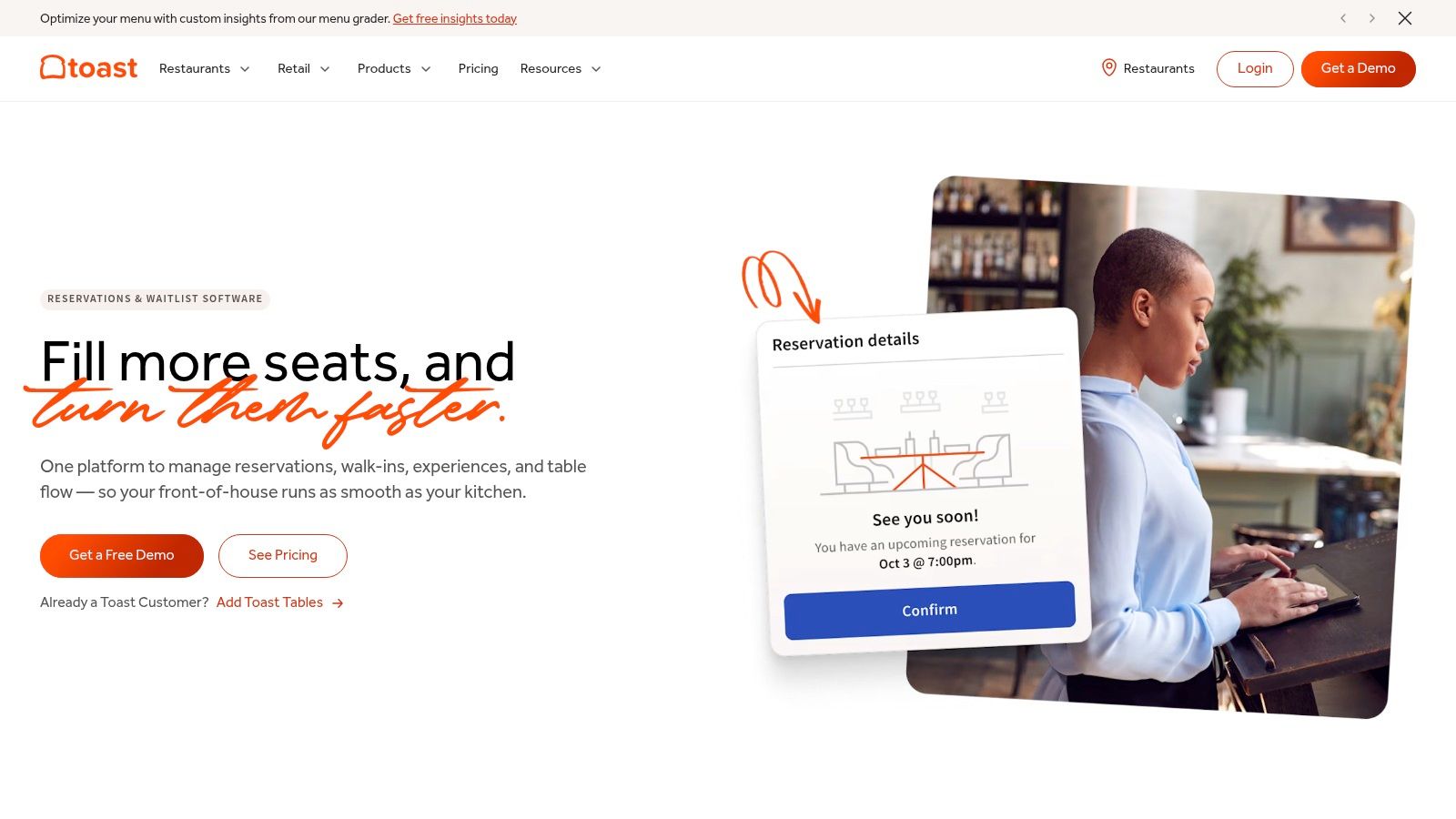
For a restaurant already using Toast POS, Toast Tables puts reservations beside table and order status, server rotations, cover counts, and guest information. Hosts can check whether a table has paid or is still on mains before estimating a walk-in wait. That can help the team pace seating against the live service, though the benefit depends on having Toast order data connected.
Guests can book through the restaurant website, Google, and Toast's Local app. The system also includes waitlists, guest profiles, messaging, visit history, and prepayment options for experiences. Venues still tracking bookings on paper may benefit from connecting reservations with service and order information, but a survey claim about how many operators use reservation software is not needed to make that case.
The main trade-off
Integration check: A reservation tool tied to one POS is a two-product decision. Price the till, the add-on, and the switching cost together.
Toast Tables directs buyers to pricing information or a demo instead of publishing a full fee schedule. Ask for a quote, then compare the add-on cost with the time saved on each busy shift. It is a practical fit for Toast venues that want one vendor and less duplicate entry. Restaurants using another POS should assess whether the reservation features justify switching, and whether the service benefits remain without Toast order data. For a broader checklist before choosing a POS, see this overview of restaurant POS systems.
7. Eat App
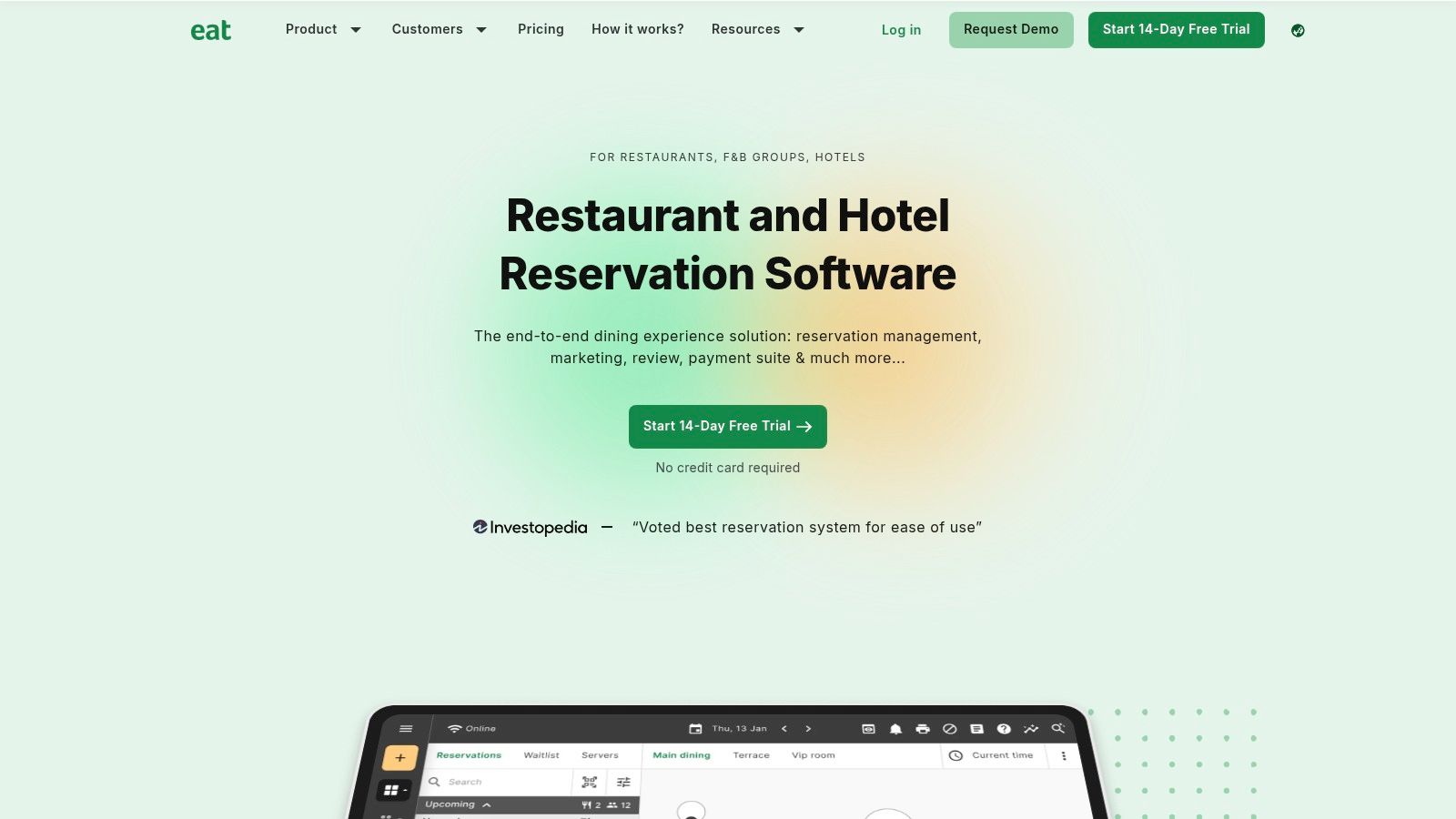
Starting free and adding features later is a reasonable plan for a small venue, and Eat App supports exactly that. It offers reservation and table management, waitlists, guest profiles, messaging, analytics, and marketing tools, from a limited free tier up to Enterprise options. Published paid plans start at $99 per month, which undercuts most of this list on headline price.
Core host stand work is covered. Online reservations, customizable booking widgets, floor plans, guest tags, reservation messaging, and post-dining surveys handle daily service. Marketing automation and advanced reports sit on paid plans, and POS or payment integrations appear on some plans or as add-ons. Same-day demand is where those floor tools get tested, since 2025 industry reporting on restaurant technology indicates that 66% of diners book same-day reservations and online bookings rose 21% year over year. A widget alone doesn't answer that. The floor plan has to absorb short-notice bookings without breaking pacing.
Limits to price in
- Free plan cap: Limited to 100 guests per month, so a moderately busy brunch venue outgrows it fast.
- Integration costs: POS integration availability and pricing vary by plan, so confirm the till connection before budgeting.
- Messaging allowances: SMS and WhatsApp use beyond plan limits costs more, which adds up with reminders on every booking.
Eat App fits small cafés, brunch spots, and first-time digital bookers who want published pricing and a low-commitment start. Larger venues should model the higher tiers plus add-ons, because the gap against mid-priced rivals narrows once messaging and integrations are included.
How the Seven Reservation Platforms Compare on Price, Free Access, and Fit
| Item | Published Starting Price | Free Plan | Best For |
|---|---|---|---|
| 10seat | Not specified | Yes, up to 50 covers per month | Optimizing seating and managing walk-ins |
| OpenTable for Restaurants | $149/month | No free plan stated | Restaurants seeking marketplace exposure |
| Resy | $289/month | No free plan stated | Busy restaurants wanting predictable monthly pricing |
| SevenRooms | Quote-based | No free plan details provided | Multi-venue operators focused on guest CRM and marketing |
| Tock | $289/month | No free plan stated | Restaurants selling tasting menus and bookable experiences |
| Toast Tables | Not specified | No free plan details provided | Restaurants already using Toast POS |
| Eat App | $99/month | Yes, limited to 100 guests per month | Restaurants seeking flexible reservation tools and guest marketing |
Choosing the Right Platform Before Your Next Busy Service
Start with your busiest shift, not the feature list. Count covers lost to no-shows, walk-ins turned away while reserved tables sat empty, and minutes the host spent rebuilding the floor plan by hand. Those three numbers decide which tool pays for itself.
Reservation management is a revenue problem, not a calendar. Operations research in the 2025 Restaurant Business Digital Technology Report recommends calculating dynamic no-show and cancellation probabilities per booking request, using meal period, day of week, and guest history. Expected arrivals, not booked seats, should drive pacing and overbooking decisions. Any tool on the shortlist should expose booking lead time, party size, and cancellation patterns so managers can set deposits and table release rules per service instead of one blanket policy.
Turn time is the other lever. Research on pooled restaurant reservations found better reservation coordination can reduce table turn time by 15 minutes in more than 15% of simulated service periods. In a 40-cover room, recovering 15 minutes across part of a peak service creates seating capacity without new tables, provided the kitchen can support the faster flow. That is a concrete time saving to test in a trial, and it separates floor management tools from booking widgets.
Match the tool to the venue
- Independent Benelux venues with direct demand: 10Seat, where zero commission and table optimisation matter more than marketplace reach. Compare tiers on the 10Seat pricing page against current cost per booking.
- Venues that need discovery: OpenTable, priced with cover fees included.
- High-volume upscale rooms: Resy, for predictable subscription cost.
- Groups investing in guest data: SevenRooms, with staff time budgeted to use the CRM.
- Tasting menus and ticketed experiences: Tock, built around prepayment.
- Toast POS venues: Toast Tables, for live order status at the host stand.
- Small venues starting out: Eat App, for a free entry point and published pricing.
GKS compliance for Belgian venues
Belgian operators need one extra check. Under official GKS guidance, restaurants and caterers must use a Geregistreerd Kassasysteem when annual turnover from restaurant and catering services, excluding drinks, exceeds €25,000 excluding VAT. The system combines a certified cash register, a fiscal data module, and a VAT signing card. Reservation software is an operational layer on top of that compliant register, never a substitute for it, so confirm POS and GKS compatibility before any migration.
Test two or three finalists on a live Friday. Track reservation-to-cover conversion, time to assign a table, walk-in acceptance rate, and covers per peak shift before and after. The tool that moves those numbers is the right one, whatever the feature list says.
10Seat helps independent restaurants serve 10 to 15% more covers per busy shift with zero commission, automatic seating, and walk-in handling built into one host view, and setup takes about five minutes. Run your next busy Friday on the free plan and compare the covers against your current system. Start at 10Seat.