Best Restaurant Reservation System: 10 Top Picks 2026
Compare the best restaurant reservation system tools for 2026 by features, pricing and venue fit to fill more covers.
Friday service is full on paper, but the dining room tells a different story. A couple occupies a table that could seat a larger party, an early departure leaves an awkward gap, and the host turns away walk-ins while trying to work out what can move. The kitchen is busy, yet some seats still aren't earning.
The best restaurant reservation system should help solve that problem, not just replace a paper diary. A booking needs a suitable table, a realistic dining window, and a place in the kitchen's workload. Guest preferences matter too, but a detailed profile won't compensate for a floor plan that requires constant manual repair.
The ranking below prioritizes covers per shift, seating automation, and total operating cost, with different recommendations for independent bistros, tasting-menu restaurants, brunch venues, and hospitality groups. It's an editorial fit ranking, not a claim that every platform has undergone the same performance test.
A fuller reservation book isn't automatically a more profitable service. The useful measure is how many guests actually sit, receive good service, and leave enough contribution to cover the cost of acquiring and serving them.
Commission-free direct booking deserves particular attention when regulars already know where to reserve. A diner marketplace can still justify its cost when it brings incremental business. The distinction is whether the restaurant needs more demand, better seating decisions, or both.
Table of Contents
- 1. 10Seat
- 2. OpenTable
- 3. Resy
- 4. SevenRooms
- 5. Tock
- 6. Toast Tables
- 7. Yelp Guest Manager
- 8. Eat App
- 9. Tablein
- 10. Resos
- Best Restaurant Reservation Systems: Top 10 Comparison
- Pick the Right Fit for Your Dining Room
1. 10Seat
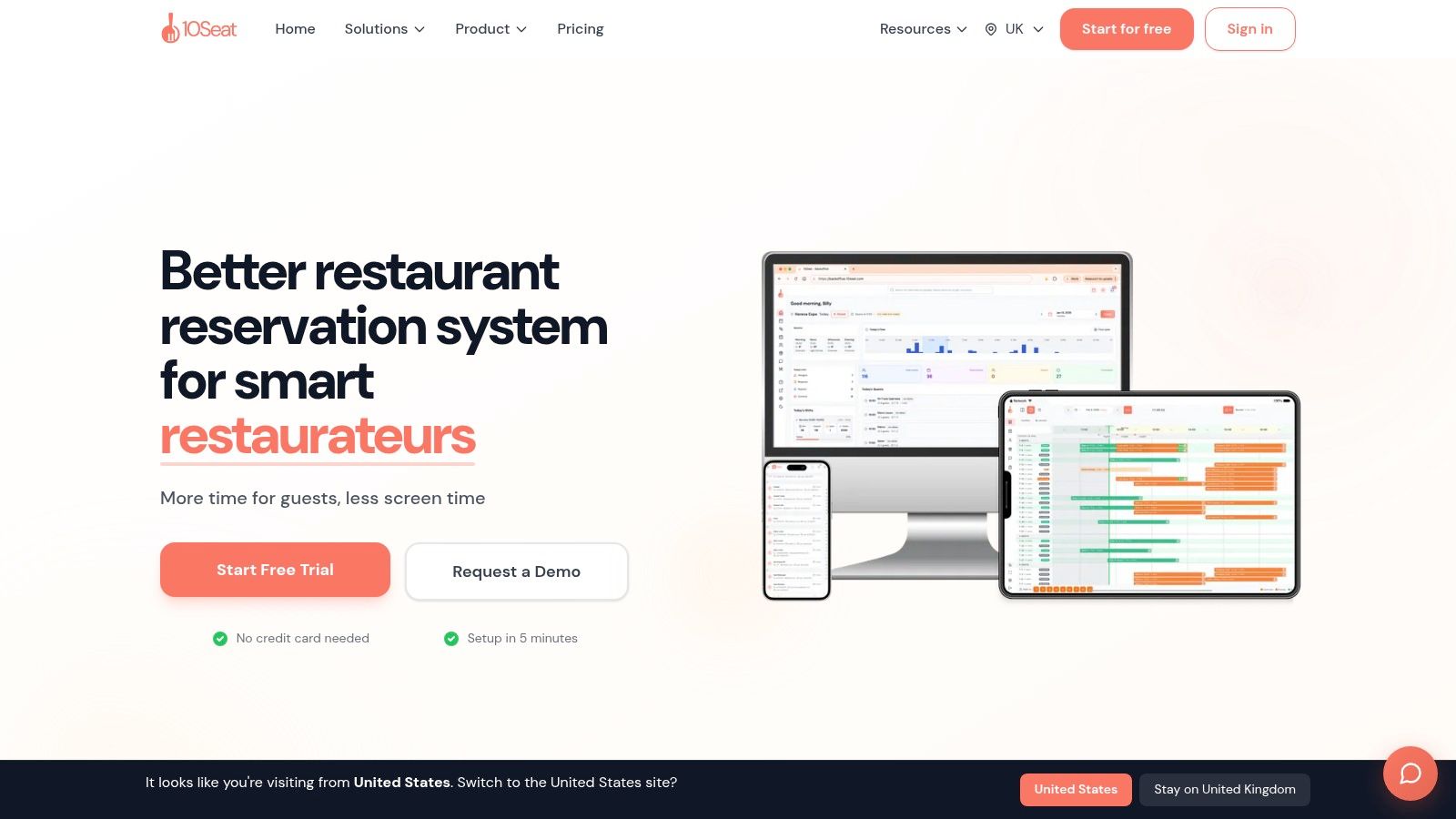
Best fit for independent Benelux restaurants that need more capacity from their existing floor plan. 10Seat combines commission-free reservation management with a Capacity Engine designed around seating decisions rather than booking collection alone.
Its Smart Auto Seating, Auto Seating Puzzle, and Walk-in Squeeze match reservations to suitable table configurations and identify short openings. The practical attraction is straightforward: a host can assess an unexpected arrival without rebuilding the entire reservation book.
The company reports up to 10–15% more covers per busy shift, 30% more reservations, and 40% fewer no-shows, but these are company-reported outcomes, not guaranteed results or independently established benchmarks, as described in the 10Seat product overview.
Where It Can Earn Its Place
A focused host app brings live table status, pacing controls, reservations, walk-ins, and waitlists together. Guest profiles capture preferences, allergies, and occasions, while an instant booking page supports reservations from a restaurant website, social channels, or QR code.
- Operational strength: Seating recommendations target fragmented availability, particularly useful when party sizes vary throughout service.
- Hospitality support: Guest details stay connected to the booking rather than sitting in a separate notebook.
- Group suitability: Centralized management supports operators running more than a single dining room.
- Commercial limitation: Paid-plan costs need confirmation before a restaurant can calculate its full ongoing return.
Setup is advertised at five minutes, with no credit card required, and the free On the House plan includes up to 50 covers per month, according to 10Seat's plan information.
That makes it approachable for a controlled trial. The useful test isn't whether the software accepts bookings, but whether hosts make fewer manual adjustments while seating more guests without overloading the pass.
2. OpenTable
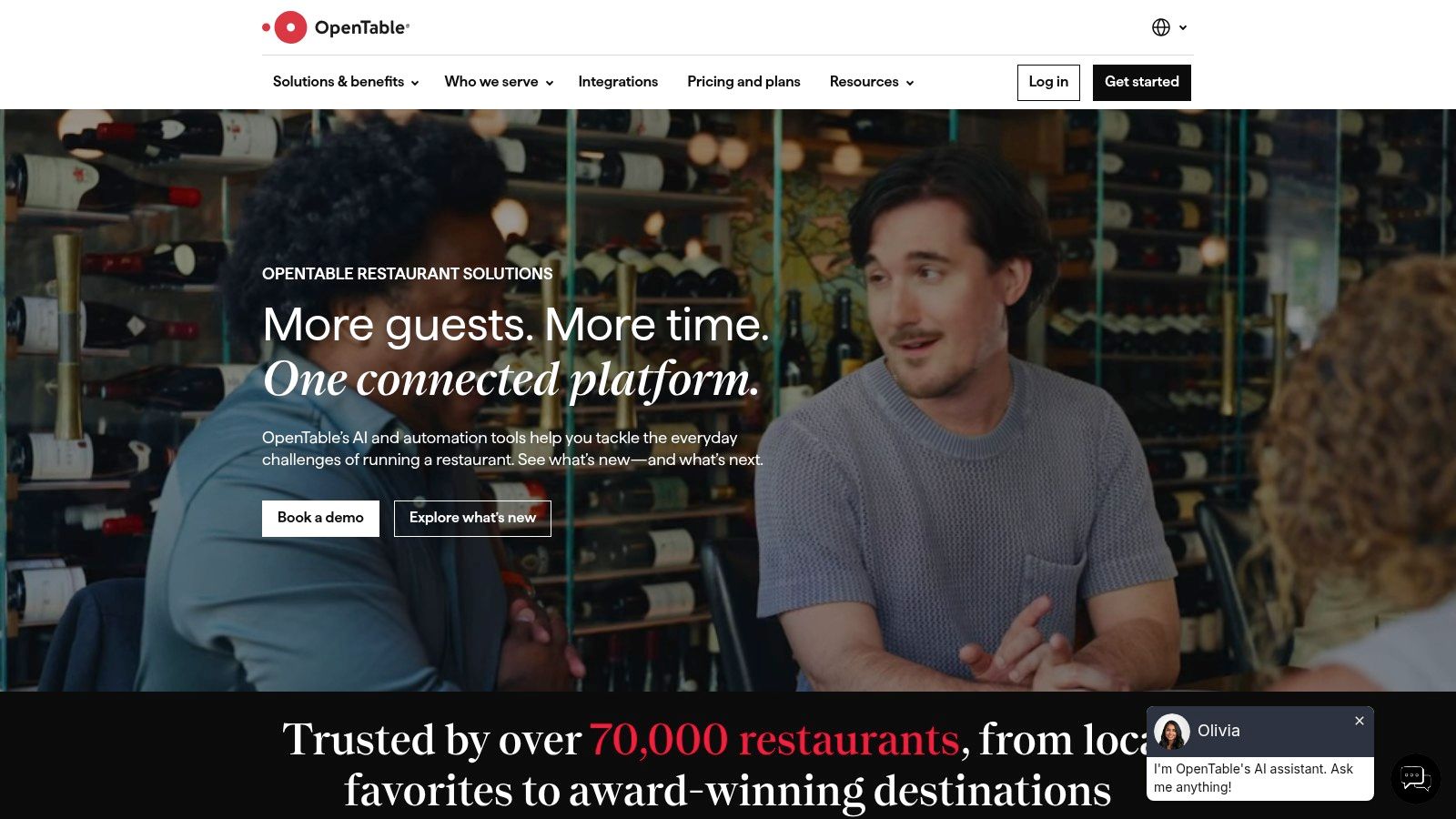
Best fit when diner discovery can justify booking-related charges. Compared with a commission-free direct-booking model, OpenTable combines operating software with a consumer-facing reservation network.
Its restaurant solutions include booking widgets, restaurant profiles, floor plans, table assignments, waitlists, and reservation inventory controls. Deposits, card holds, and ticketed experiences support different booking policies, while guest relationship features depend on the selected tier.
The commercial question is whether marketplace reservations represent additional business or guests who would otherwise have booked directly. Both fill seats, but they don't have the same acquisition cost.
Compare Booking Sources, Not Just Subscriptions
- Strongest advantage: A diner-facing marketplace can complement the restaurant's own booking channels.
- Operational value: Reservation controls and table management support service beyond the initial booking.
- Cost exposure: Some network and website bookings can generate additional fees.
- Buying risk: A broad feature package may exceed the needs of a straightforward neighborhood reservation book.
A useful demonstration should show how a cancellation returns to inventory, how a delayed table affects later reservations, and how the host handles a changing party size. These are better tests than a polished booking-screen walkthrough.
A guide to online restaurant reservation workflows provides a useful basis for comparing direct reservations with marketplace bookings. The strongest buying decision separates demand generation from dining-room efficiency, then prices each against its actual contribution.
3. Resy
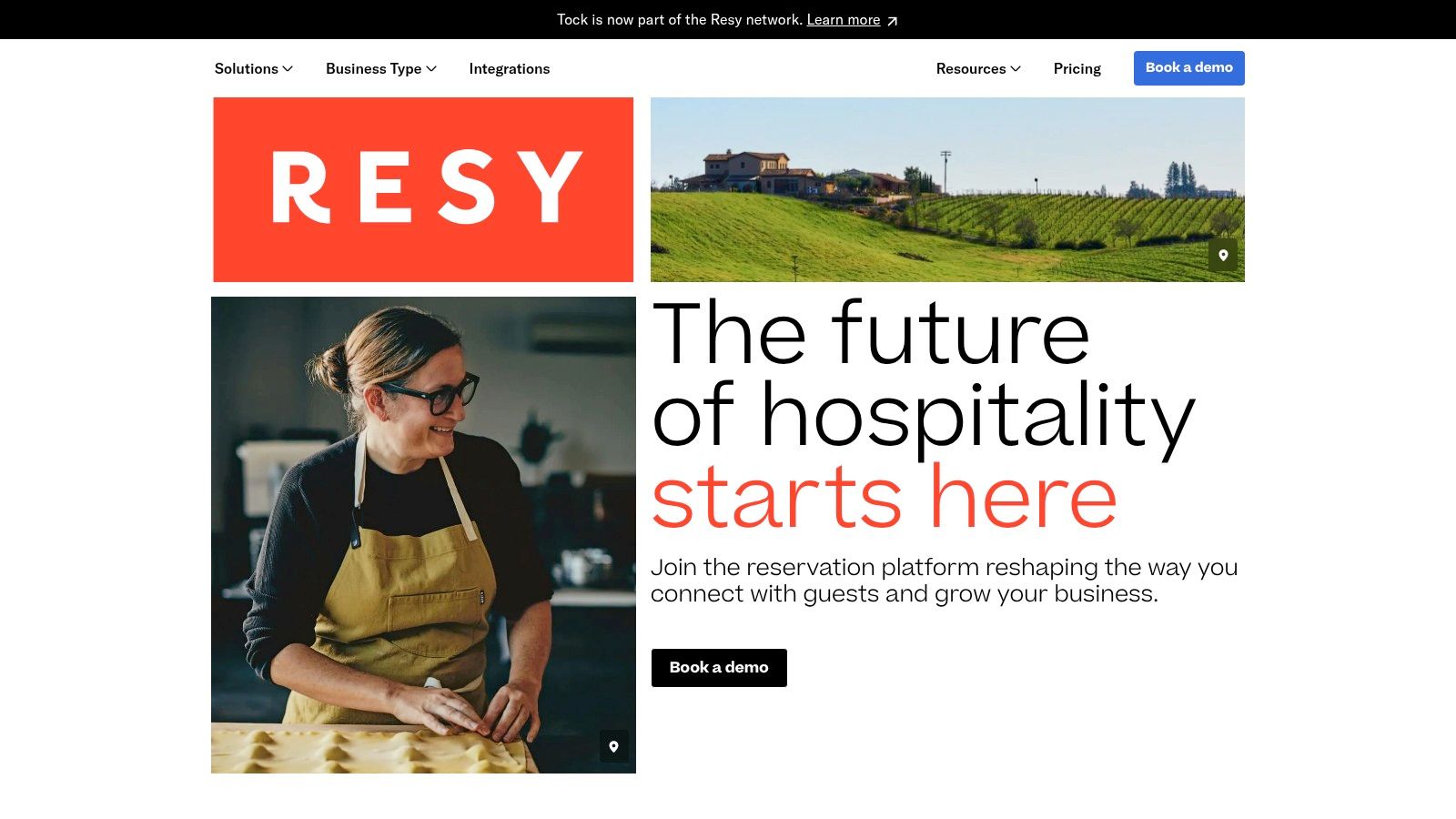
A restaurant with established demand may prefer a predictable subscription to charges that grow with covers. Resy is a candidate for that model, combining reservations and table management with a diner-facing booking network.
Resy's restaurant plans use monthly subscriptions without per-cover or per-reservation charges, according to the vendor. Floor-plan management, walk-in waitlists, and availability alerts support standard service, while payment tools, integrations, and advanced guest analytics vary by plan.
Predictable booking costs don't mean every expense disappears. Prepayment fees and payment-processing charges still matter where the restaurant sells experiences or collects money during booking.
Subscription pricing is easier to budget, but only when the chosen tier includes the tools the host and manager actually need.
Check Access Controls Alongside Guest Analytics
Reservation access also deserves attention. Resy reported a 90% reduction in no-shows associated with accounts identified as using bots or resale-related behavior in New York, comparing the prior year with July 2025, according to coverage of reservation resale and restaurant technology.
That finding concerns flagged accounts, not all restaurant reservations. Buyers should ask how restrictions are explained, reviewed, and corrected when legitimate guests are affected.
The online booking system selection guide offers another framework for comparing workflow and commercial fit. For Resy, the deciding factors are local network relevance, required plan tier, and the cost of payment-related features.
4. SevenRooms
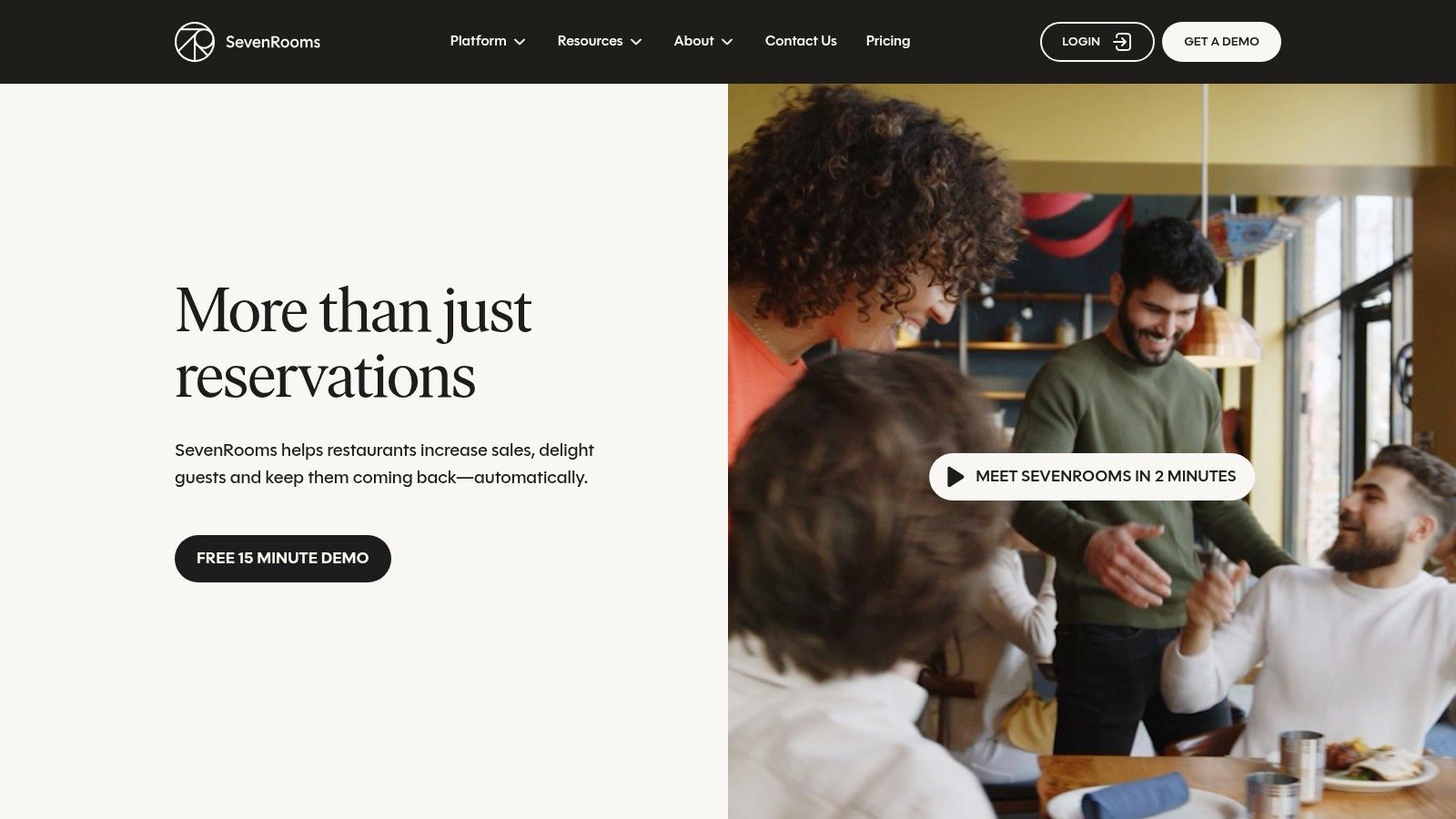
SevenRooms makes the most sense when guest relationships extend beyond the reservation book. A restaurant group managing repeat visits, private events, and cross-venue recognition has different requirements from a bistro that mainly needs accurate availability.
The SevenRooms platform connects reservations, waitlists, table management, and guest profiles with segmentation and marketing tools. Ticketed events, private-event management, and group capabilities broaden its scope, with availability depending on the package.
That breadth can be valuable, but somebody must own the work. Guest tags, campaigns, and reporting need clear rules and ongoing attention if they're going to support useful hospitality rather than create another administrative task.
Buy the Workflow That Will Actually Be Used
- Best operational fit: Groups and relationship-led venues that need shared guest information and coordinated communication.
- Main strength: Booking, guest recognition, and marketing can sit within the same platform.
- Commercial constraint: Pricing requires a quote rather than a straightforward public cost comparison.
- Scope risk: Messaging, events, and group functions may involve add-ons or capabilities a smaller venue won't use.
The demonstration should follow a guest from booking through arrival, service notes, and a subsequent visit. It should also show how managers prevent inaccurate or overly broad notes from spreading across venues.
For covers per shift, the key question remains practical: does the host gain clearer seating decisions during a busy service? Strong marketing functionality shouldn't obscure that test.
5. Tock
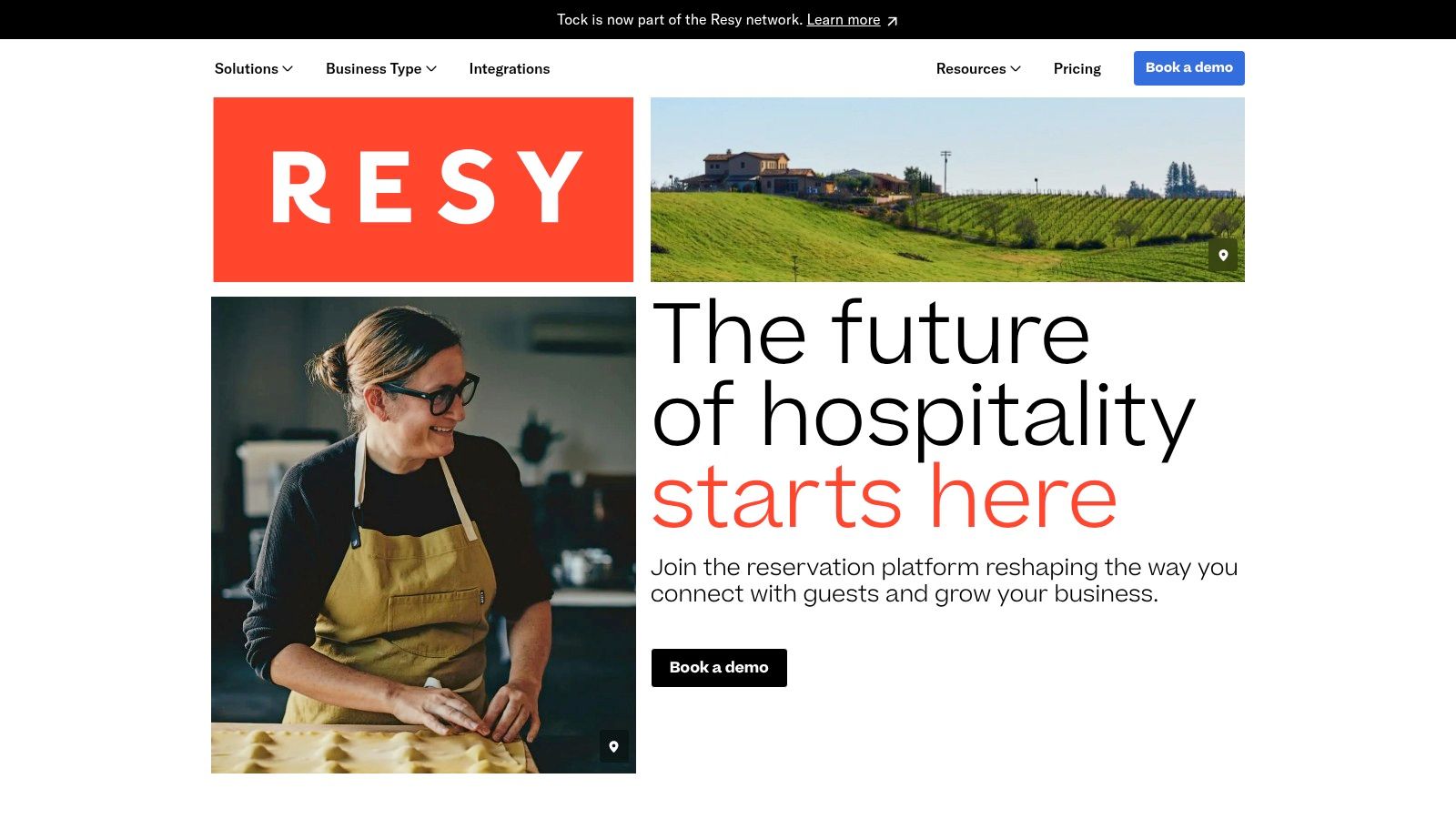
A tasting-menu restaurant sells more than table availability. It commits ingredients, preparation, and service time before the guest arrives, making Tock a natural candidate for experience-led venues.
Tock's hospitality offering combines reservations and table management with bookable experiences, event ticketing, deposits, card holds, and prepayments. It also provides guest information, reporting, and selected integrations.
The trade-off is payment complexity. Prepayment fees, processing costs, cancellation rules, and refunds all belong in the cost comparison, not just the software subscription.
Protect Capacity Without Making Booking Unpleasant
A peer-reviewed study of cancellation barriers found that stricter policies and more complicated cancellation procedures reduced stated no-show intentions, but also reduced booking intentions. Its practical lesson is to apply friction selectively rather than make every reservation feel punitive.
- Good use case: Tasting menus, chef's counters, ticketed dinners, and other offerings with substantial advance commitment.
- Useful protection: Deposits or prepayment can align the booking with the restaurant's preparation obligations.
- Important limitation: A restaurant needing only a simple booking diary may not benefit from the broader experience-selling tools.
Cancellation terms should be visible before payment, with a clear process for changing plans. A released table is still useful inventory if staff can offer it again promptly.
Tock should therefore be judged on both experience revenue and recovery workflow. Selling the booking is only part of the job; handling changes without tying up a manager matters too.
6. Toast Tables
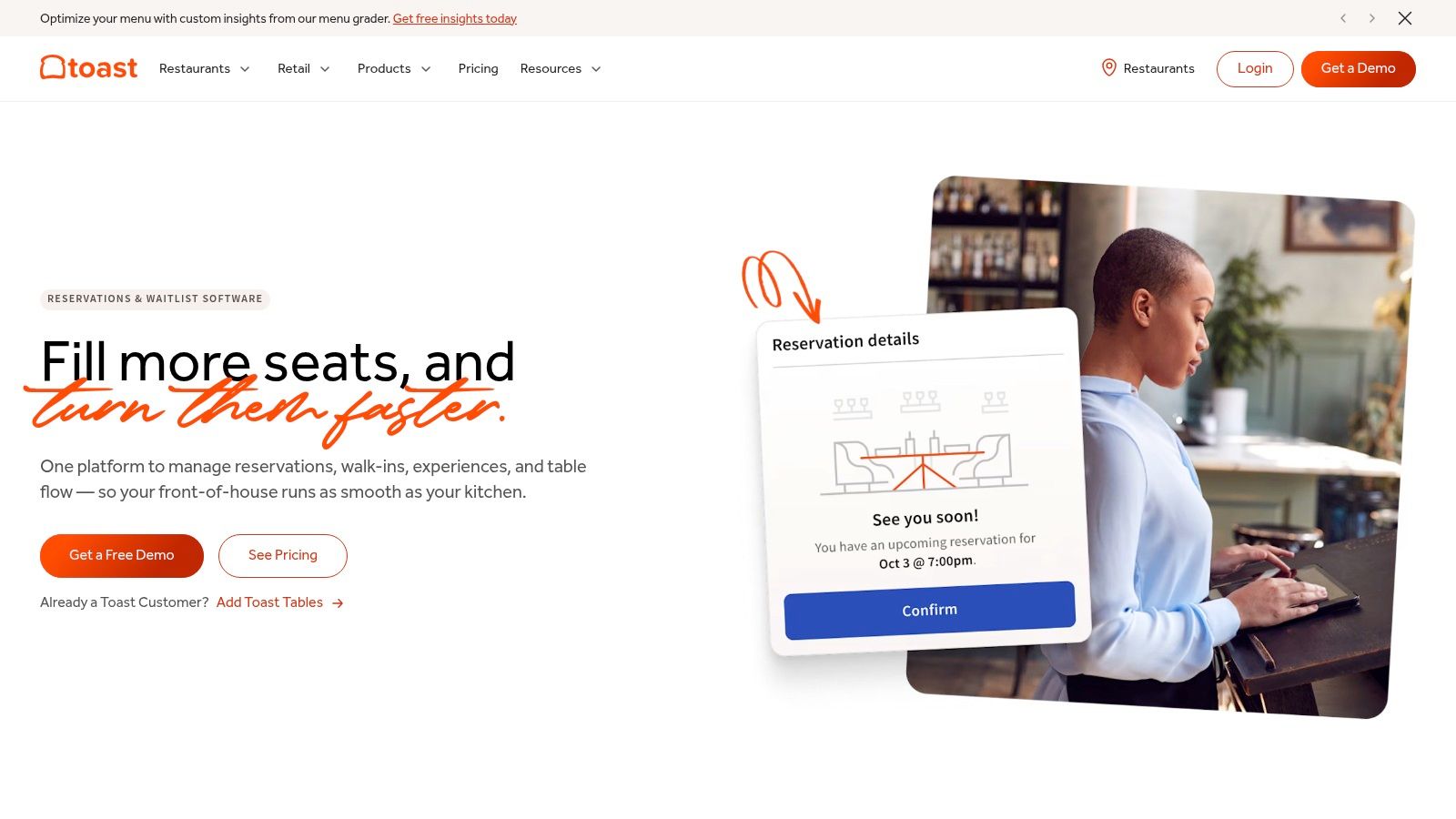
For restaurants already using Toast POS, Toast Tables deserves an early demonstration. Its appeal is the connection between front-of-house reservations and information from the restaurant's existing operating environment.
The Toast Tables product includes reservations, walk-in waitlists, floor plans, guest notes, messaging, and server rotations. Toast also describes POS-linked table and order status information, helping staff assess service progress rather than relying only on scheduled departure times.
That connection matters when the host needs to distinguish a table finishing dessert from a table that hasn't ordered mains. However, the restaurant should verify exactly which status information appears and how staff keep it accurate.
Integration Value Comes With Hardware Questions
- Strongest fit: Existing Toast restaurants seeking connected guest and service workflows.
- Device requirement: The host app needs compatible tablets and doesn't run on Toast-branded POS devices.
- Seating control: Hosts or managers assign tables; guests don't select their own.
- Cost check: Plan eligibility, host hardware, and optional payment or experience functions need confirmation.
A comparison of free restaurant reservation systems can help separate a low entry price from the cost of a usable deployment.
For a restaurant outside the Toast ecosystem, the integration benefit needs closer scrutiny. Changing a POS merely to simplify reservations introduces a much broader operational decision than replacing the booking book.
7. Yelp Guest Manager
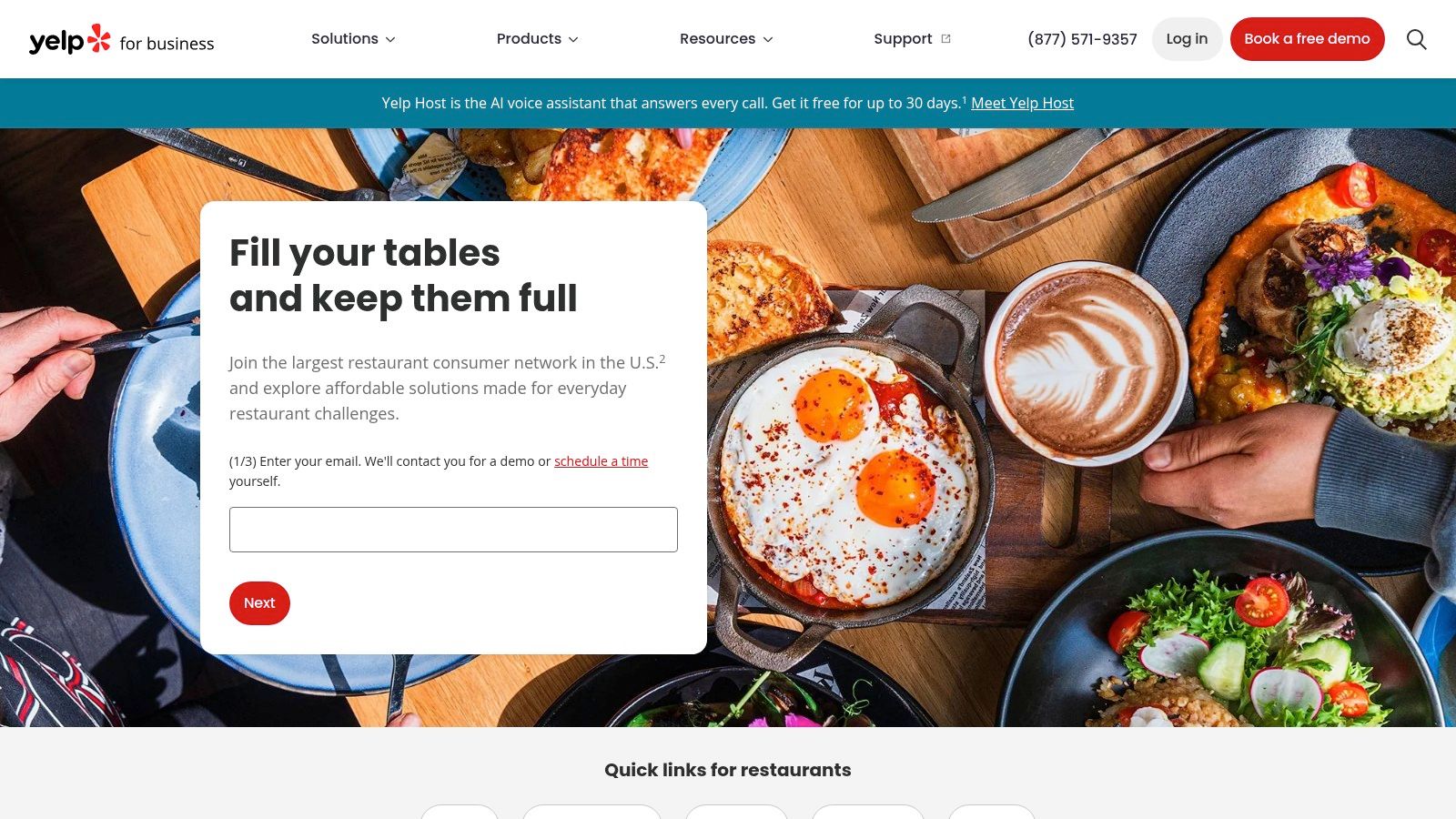
The first question for Yelp Guest Manager isn't about floor-plan design. It's whether the restaurant's actual customers use Yelp to find places and join queues.
Yelp's restaurant tools combine reservations, waitlists, table management, guest notifications, and related front-of-house functions. Website bookings, custom floor maps, POS integrations, takeout management, and optional kiosk functionality broaden the offering.
The strongest fit is a venue with meaningful Yelp-driven demand and substantial walk-in traffic. For a Benelux restaurant, that relevance should be established from its own booking and discovery patterns rather than assumed.
A consumer platform is valuable when the restaurant's guests use it. Familiarity in another market isn't a substitute for local demand.
Test the Queue Under Pressure
The demonstration should include a delayed reservation, a walk-in party, a cancellation, and a table that remains occupied longer than expected. Staff need to see how these changes affect quoted waits and available inventory.
- Practical advantage: Reservations and walk-ins can be managed alongside other front-of-house tasks.
- Potential extra cost: Kiosk functionality and other capabilities may require add-ons.
- Buying caution: Current prices and included features should be confirmed directly rather than inferred from older published offers.
Public app feedback can help identify questions to ask, but it doesn't establish how the product will perform in a particular dining room. A live workflow trial is more useful than choosing on review sentiment alone.
8. Eat App
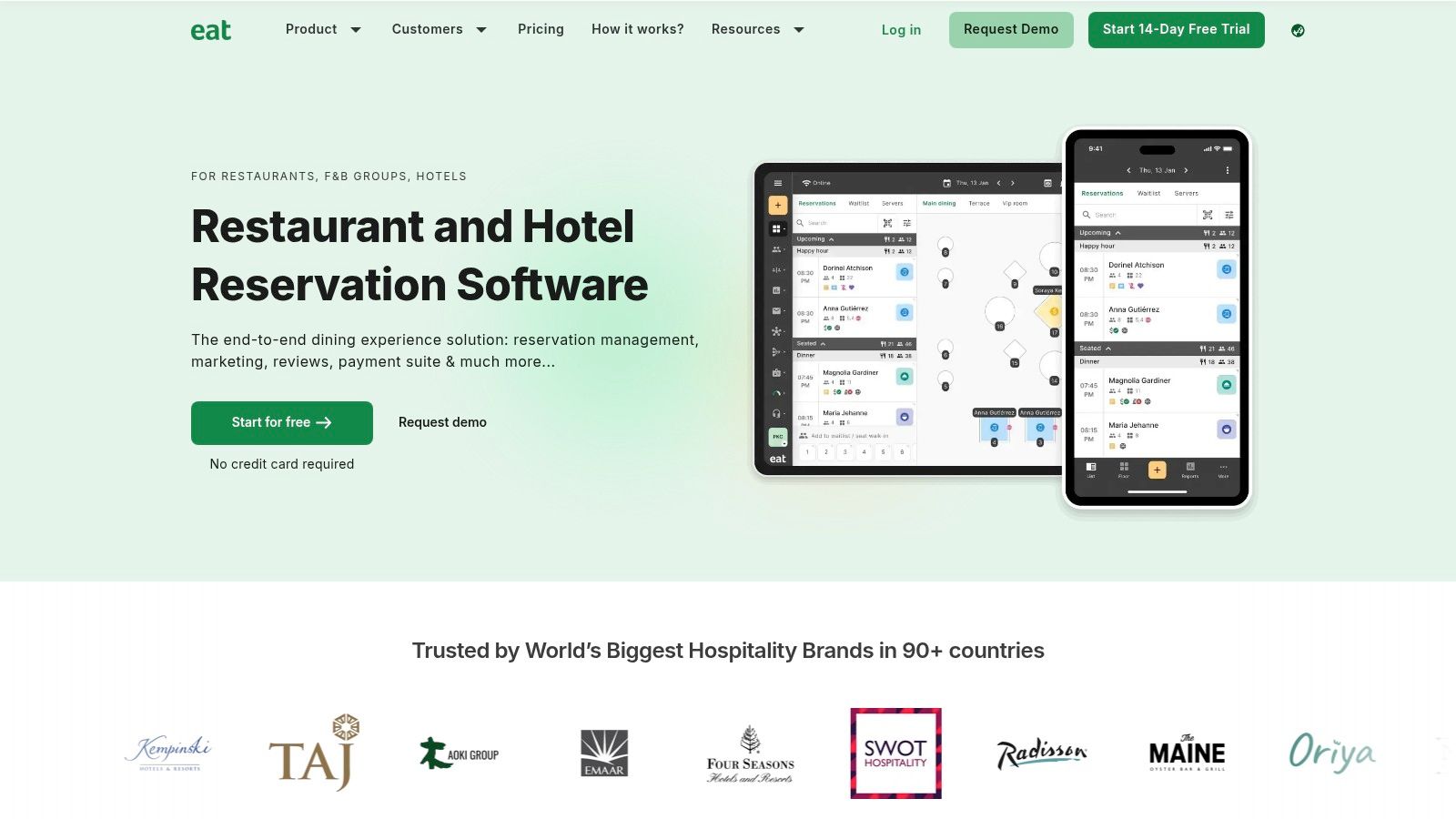
Eat App suits restaurants that want reservation operations and guest management with visible plan choices. Its published tiers make it possible to compare scope before entering a sales process.
The Eat App platform brings together online bookings, table management, waitlists, guest profiles, tagging, and reservation messaging. Deposits, prepayments, marketing automation, reporting, and integrations extend the system, depending on the plan and any additional charges.
A free option can make an initial assessment easier, but the right comparison is the tier that supports a normal busy service. A trial configured with minimal traffic won't expose messaging costs, integration requirements, or training needs.
Test Smaller Parties and Earlier Demand
In Q3 2025, solo reservations increased 22% year over year, according to published dining-trend data. That makes party-size handling a useful test for any floor-management platform, including Eat App.
A solo booking should be welcomed without leaving the host unable to protect suitable combinations for larger parties. The system should also let managers control pacing when early demand concentrates arrivals.
- Strength: Reservation tools and guest information sit together.
- Cost watch: Message allowances, integrations, and advanced features can change the effective price.
- Implementation need: Tags, booking rules, and staff permissions require deliberate setup.
The deciding question is whether the selected plan supports the restaurant's real service pattern without frequent workarounds or unexpected upgrades.
9. Tablein
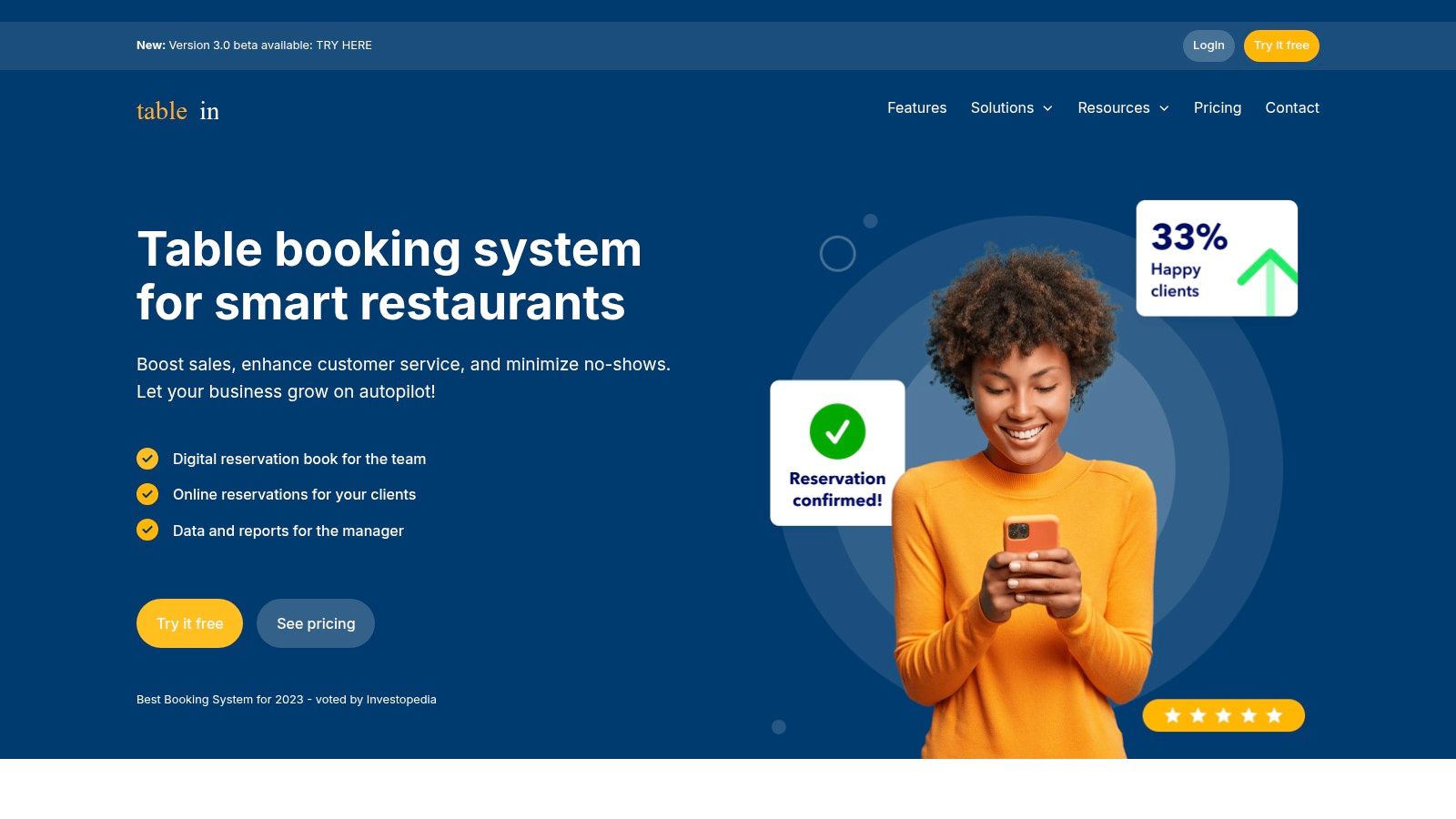
Not every restaurant needs an extensive marketing suite. Tablein is worth considering for independents that want a clear reservation calendar, floor plan, and guest record.
Tablein's reservation system includes a booking widget, reservation management, guest history, notes, reporting, deposits, card security, and notifications. Public plans distinguish booking-volume allowances, making upgrade requirements part of the initial comparison.
That structure is useful for a seasonal restaurant, provided the owner prices a busy period rather than an annual average. Additional-reservation charges and destination-dependent SMS costs should be included in the estimate.
Separate a Visual Floor Plan From Dynamic Allocation
A floor-plan display doesn't, by itself, establish how effectively a system reallocates bookings. Buyers should ask what happens when an early arrival, extended meal, or changed party size makes the original assignment inefficient.
A summary of restaurant reservation-pooling research reports simulated 15-minute reductions in table-turn time in more than 15% of cases when reservations were pooled across suitable tables. That isn't a Tablein performance claim, but it demonstrates why allocation behavior deserves scrutiny.
- Commercial benefit: Public volume limits make potential upgrade points easier to identify.
- Direct-booking detail: Tablein states that Google Reserve bookings carry no commission.
- Operational caution: Complex group requirements and support arrangements need confirmation.
Tablein's free trial and stated absence of a minimum subscription term support a practical assessment. The trial should include manual reassignment and cancellation recovery, not just accepting new reservations.
10. Resos
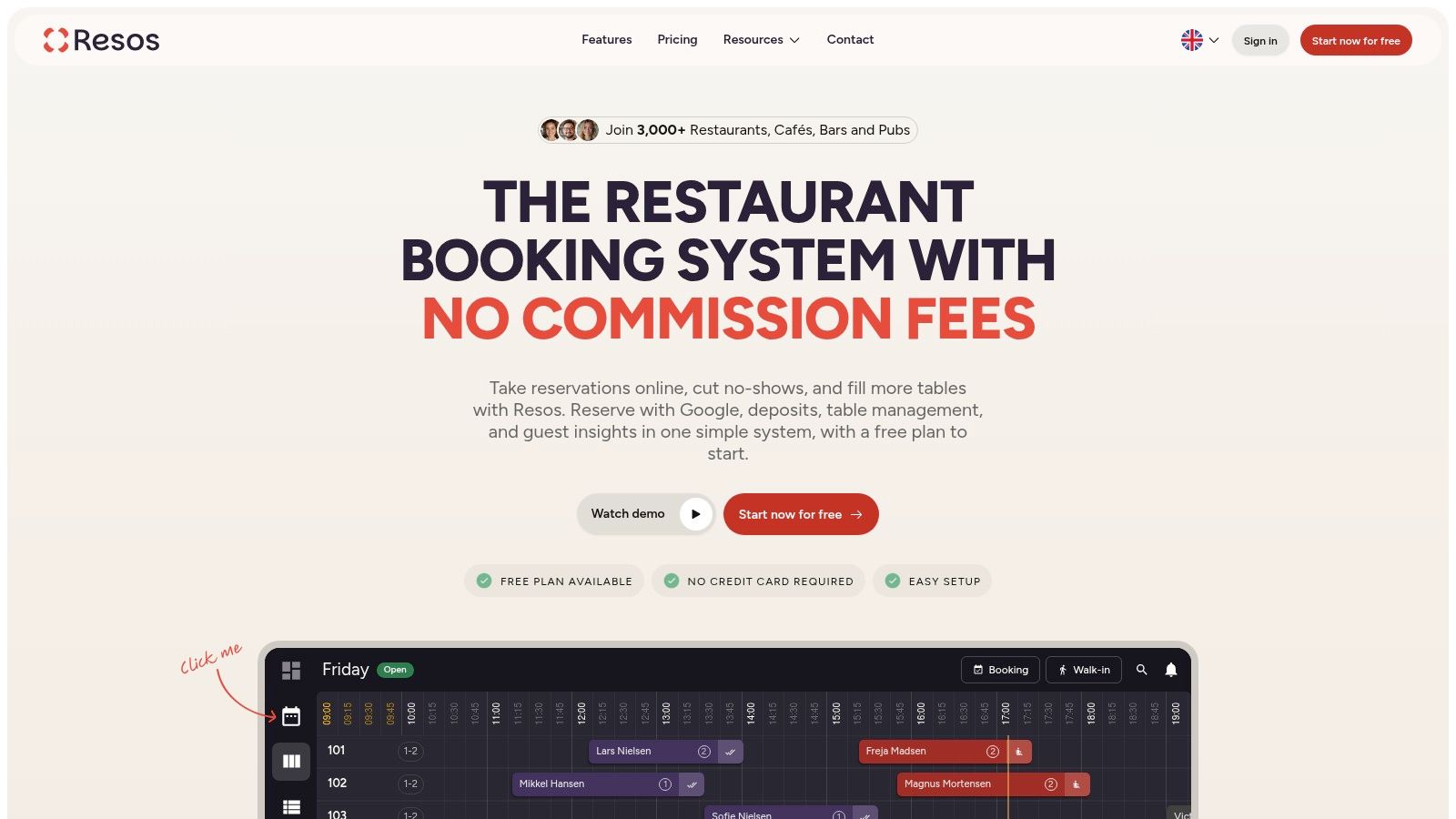
Resos fits smaller operations that want direct bookings and a volume-based route into paid software. Its focus is reservations, table management, guest records, and reporting rather than relying on a built-in diner marketplace.
The Resos restaurant booking system offers a free plan limited to 25 bookings per month, with paid tiers based on booking volume and no booking commissions or cover fees, according to the vendor.
Optional capabilities include online payments, Google bookings, experiences, and multi-location functions. That modular approach can keep the initial setup focused, but the restaurant needs to price the combination it will use.
Count Bookings and Covers Separately
A booking allowance isn't a cover allowance. A restaurant taking larger parties may seat substantially more guests than another venue with the same number of reservations, so plan comparisons need consistent units.
- Good fit: Smaller independent venues with established direct demand.
- Pricing strength: Public tiers make booking-volume upgrades visible.
- Add-on exposure: Payment and booking-channel functions can increase the total.
- Acquisition trade-off: Compared with marketplace-based subscriptions, direct-booking software requires the restaurant to generate its own discovery.
The floor-plan demonstration should include changes during service, not just advance booking. Staff need to know how quickly they can move a party, update availability, and recover a cancelled slot.
Resos is a sensible shortlist candidate when simplicity and direct-booking economics matter more than extensive guest marketing. Its value depends on the final add-on package and the amount of manual work left with the host.
Best Restaurant Reservation Systems: Top 10 Comparison
| Platform | Core Capabilities | Standout Value | Best For | Pricing Notes |
|---|---|---|---|---|
| 10Seat, Recommended | Reservations, live floor management, waitlists, guest profiles, automated seating | Capacity Engine optimizes table configurations and walk-ins; advertised free plan and five-minute setup | Restaurants seeking to increase covers with their existing floor plan | Free up to 50 covers per month; pricing beyond that not specified |
| OpenTable | Reservations, floor plans, waitlists, guest profiles, diner marketplace | Broad diner discovery network and operational tools | Restaurants prioritizing marketplace visibility | US plans published; some bookings may incur additional fees |
| Resy | Reservations, floor management, waitlists, guest alerts, payment options | Subscription pricing without per-cover fees, according to the vendor | Restaurants seeking a booking network and predictable subscription costs | Monthly plans; payment fees may apply to relevant features |
| SevenRooms | Reservations, guest profiles, marketing, events, multi-venue tools | Combines guest relationship management with operations | Guest-focused restaurants and multi-location groups | Quote-based; some capabilities may be add-ons |
| Tock | Reservations, table management, events, deposits, prepayments | Supports ticketed dining and paid experiences | Tasting menus, chef's counters, and event-led venues | Payment and processing fees may apply |
| Toast Tables | Reservations, waitlists, floor plans, guest details, Toast POS data | Fits into the Toast restaurant technology ecosystem | Restaurants already using Toast POS | Confirm current pricing, plan eligibility, and device requirements |
| Yelp Guest Manager | Reservations, waitlists, floor maps, notifications, POS integrations | Connects front-of-house tools with Yelp's diner audience | Restaurants whose customers use Yelp | Confirm current pricing and feature availability |
| Eat App | Reservations, table management, guest CRM, messaging, marketing | Free option and published paid tiers | Restaurants wanting booking and guest tools with visible plan options | Free plan and paid tiers; some features may cost extra |
| Tablein | Online booking, reservation calendar, floor plan, guest database | Public plans show booking limits and upgrade paths | Independent restaurants comparing booking-volume plans | Public pricing; limits, extra booking, and messaging costs may apply |
| Resos | Direct bookings, floor management, guest records, reporting | Free tier and vendor-stated no-commission paid plans | Restaurants focused on direct bookings and configurable add-ons | Free plan limited to 25 bookings per month; add-ons may cost extra |
Pick the Right Fit for Your Dining Room
The best restaurant reservation system depends on the constraint holding back service. A bistro with strong demand and awkward table gaps should prioritize allocation and pacing, while a destination restaurant needing discovery may reasonably pay for access to a booking network.
For tasting menus, deposits, prepayments, and clear cancellation handling deserve more weight. For groups, shared guest records and management controls may justify broader software, provided somebody has responsibility for maintaining them.
- Independent bistros and brasseries: Start with seating efficiency, direct-booking costs, and host usability.
- Fine dining and experiences: Examine payment costs, cancellation terms, and the handling of dietary information.
- Brunch and walk-in-heavy venues: Test waitlist recovery, arrival pacing, and changing table status.
- Hospitality groups: Check permissions, shared guest records, integrations, and location-level reporting.
Calculate Return From Seated Guests
A useful return calculation starts with additional seated covers multiplied by contribution per cover, then subtracts software, messaging, payment, and incremental service costs. Total sales alone can make an expensive acquisition channel look more attractive than it is.
For scale, applying a published dataset's rates to 500 advance reservations would mean approximately 19 no-shows and 75 cancellations, an illustration provided in Bloom Intelligence's reservation analysis. Those aren't forecasts for every restaurant, but they show why cancellation recovery belongs beside prevention in a buying decision.
Track seated covers, manual booking adjustments, host decision time, and kitchen pacing during the trial. Any apparent capacity gain loses value if guests wait too long or staff need extra intervention to keep service moving.
Check Belgian GKS Obligations Separately
Belgian operators must assess GKS, or Geregistreerd Kassasysteem, using restaurant and catering turnover excluding VAT and drinks. The obligation applies above €25,000 in annual qualifying turnover, according to the official Belgian GKS guidance.
Reservation software doesn't replace the registered cash register obligation. Operators should confirm how booking deposits, payments, refunds, and fiscal receipts will work together before implementation.
Keep the Purchase Focused
Commission-free models deserve preference when direct bookings already drive profitable demand, but the final comparison must include add-ons and staff effort. Custom website or app work should sit in a separate budget, with mobile and web project budgets treated as a planning consideration rather than a substitute for the software quote.
10Seat's direct pricing offers a low-commitment starting point through its free cover allowance. The practical next step is a trial using the actual floor plan, booking rules, and difficult seating situations from a recent busy service.
10Seat offers commission-free reservations, live floor management, and seating tools designed to help independent restaurants make better use of their existing tables. Visit 10Seat to test the booking workflow and assess how its seating recommendations handle a real dining-room plan.