Restaurant Guest Management: The Practical Guide
Master restaurant guest management with proven workflows for reservations, seating, and guest profiles. Learn how to boost covers by 15% and improve service.
No-shows can drain 3% to 40% of booked demand, and that is enough to turn a busy night into a weak one. The fix is a systematic guest management process, not a busier host stand.
Friday night starts with three arrivals at once, one late table, a walk-in couple asking for “anything soon,” and a phone ringing behind the pass. The problem is rarely politeness. The problem is flow, and bad flow turns into lost covers, stressed staff, and tables that sit empty when they should be turning.
Table of Contents
- Why Modern Restaurants Need Better Guest Management
- The Real Cost of Unmanaged Guests and No-shows
- How Reservation Demand Shapes Seating Decisions
- The 10seat Platform and Dynamic Seating Workflows
- Measuring Success with Guest Management KPIs
- Preserving Hospitality While Automating Operations
- Putting It All Together Your Implementation Plan
Why Modern Restaurants Need Better Guest Management
A host stand under pressure exposes the difference between greeting guests and managing demand. When walk-ins crowd the door, a late party is still en route, and the dining room is full of awkward table gaps, the issue isn't attitude, it's control. Restaurant guest management is the discipline of controlling that flow from the first booking touchpoint to the final payment, so the room behaves like a system instead of a queue.
The dining room is a logistics problem
Most owners think in terms of software when they hear guest management, but the actual work starts much earlier. Reservations, waitlists, dynamic seating, and guest profiles only matter when they work together, because each one affects how fast a table can be reused and how confidently staff can seat the next party.
A better model starts by treating every seat as inventory. That sounds cold until the lost margin shows up on the P&L, especially on packed weekends when one poor seating decision blocks two later covers. For independent restaurants in Belgium and the Netherlands, that matters even more because every seat has to earn its keep.
Practical rule: if a host has to ask three people, check two screens, and call the floor before seating one party, the process is already too slow.
That's why many operators also look beyond hospitality ops for workflow discipline. For a useful contrast on structured planning, commercial video production services show how complex work becomes smoother when each handoff is defined.
Manual coordination breaks first
Manual desk management usually fails at the same point every time, during a rush when judgment gets rushed too. The host remembers a request, the server knows a section is tight, and the manager is trying to protect the kitchen from a sudden wave of four-tops. Without a shared live system, each decision becomes local instead of optimized for the whole room.
That is why modern guest management is not just a CRM label. It is the operating layer that keeps reservations, walk-ins, pacing, and table changes aligned with what the kitchen and floor can actually handle. When that layer is missing, the restaurant is working harder than it needs to, and still serving fewer guests than it could.
The Real Cost of Unmanaged Guests and No-shows
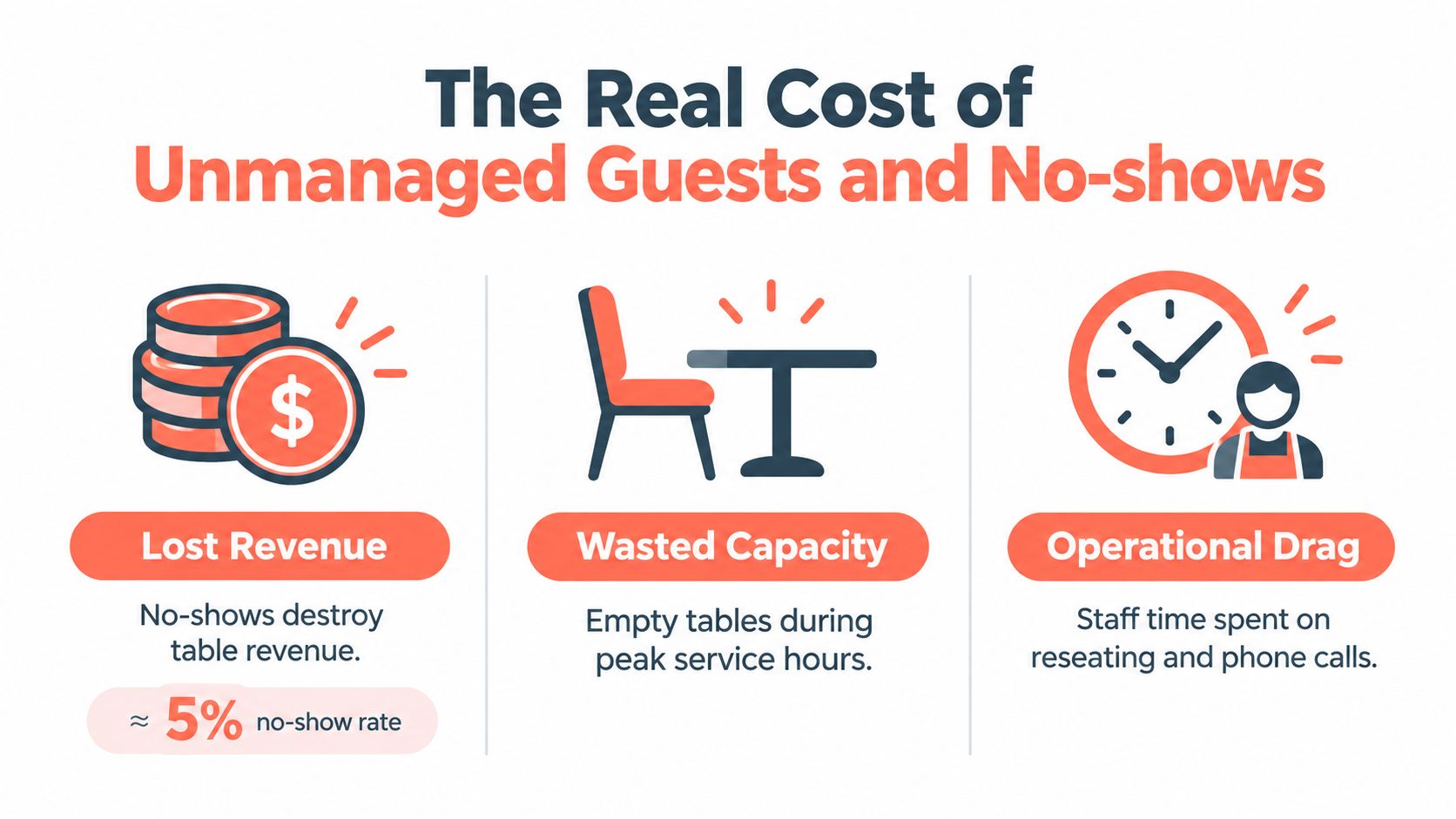
No-shows don't just lose one sale. They reduce revenue, waste capacity, and block another guest from using a table that should have turned. Historical restaurant research has reported no-show rates from 3% to 15%, while broader commentary has described about 20% as common and 40% in exceptional demand periods such as New Year's Eve, which is why reservation control can't be treated as admin work alone. Kellogg's restaurant reservations research
Empty tables are not harmless
A vacant table during peak service is lost capacity that you usually don't get back later in the shift. In a fine-dining room or a high-demand bistro, that empty seat can be more expensive than it looks because the missed cover also leaves the section imbalance in place, which affects the next seating and the pace of the dining room.
The fix is simple in concept and hard in execution. Accurate reservation records, timely confirmation and cancellation workflows, demand-calibrated policies, and the ability to release and reassign tables quickly all reduce the damage. A host stand that waits for people to call back is already behind.
There is also a customer-perception trade-off. Overly strict cancellation rules can damage evaluations, while transparent policies and a clear explanation of why they exist can improve the chance that guests honor them. That balance matters, because a restaurant that feels punitive at booking time may protect a table and lose a repeat visit later.
The goal is not to punish guests for changing plans. The goal is to stop one changed plan from affecting three future covers.
For a practical follow-up on tightening the basics, the guide on how to reduce no-show rates fits directly into that workflow.
How Reservation Demand Shapes Seating Decisions
A reservation book is only part of the demand picture. In one study of five restaurants, 60.5% of customers arrived with reservations and 39.5% were walk-ins, which means the floor plan is always balancing two kinds of demand at once. The same study found walk-ins spent, on average, $7.51 less than reservation customers, with a standard error of $3.22 and p = 0.022, so seating decisions affect both flow and check mix. Restaurant table management study
Chronological seating is too blunt
A traditional host stand often thinks in arrival order. That works until the room has mismatched parties, a few held tables, and walk-ins who could have fit perfectly if the system had more flexibility. A modern table plan has to consider party size, table compatibility, expected dwell time, and whether releasing one table now protects two later covers.
That is where operations becomes visible. A four-person party belongs on a four-top when possible, not because that is neat, but because clean fits preserve the remaining floor for the next decision. Combining or splitting tables intelligently, pacing arrivals, and protecting flexibility for walk-ins all improve utilization when they are done against live demand, not against a static map.
For a deeper look at capacity logic, capacity planning optimization is useful because it frames seating as a live allocation problem instead of a fixed layout problem. The same mindset shows up in other scheduling environments, including how RTOs handle class scheduling, where timing, room fit, and demand all have to line up.
Host judgment still matters
Technology should not erase judgment. It should give the host more accurate choices, faster. The best table management process helps the host see which seating protects the floor, which one creates a dead zone, and which one keeps the walk-in line moving without breaking service rhythm.
Practical rule: if the next seat creates a bottleneck in the kitchen or the floor, it is not truly available.
The 10seat Platform and Dynamic Seating Workflows
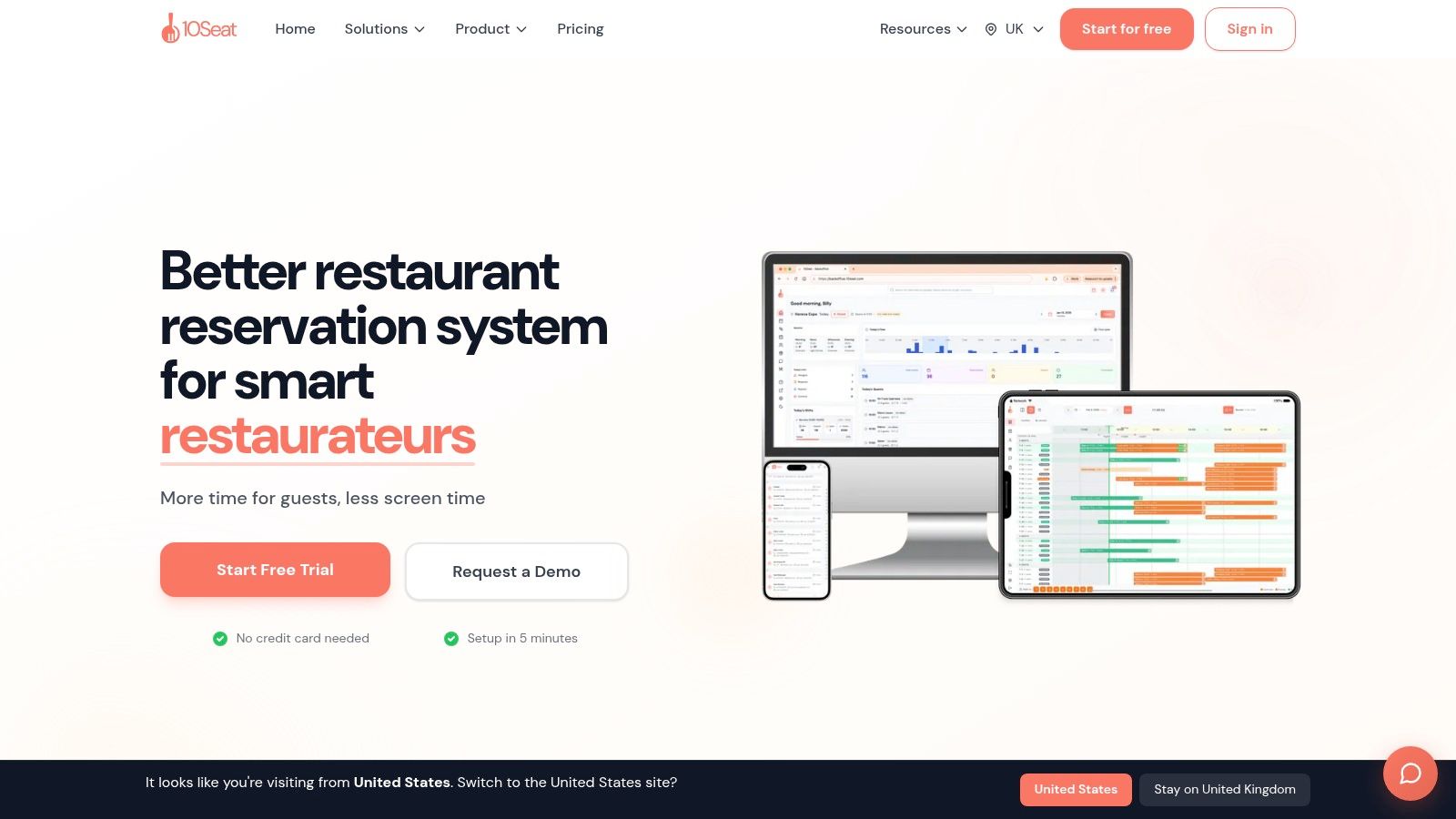
For independent restaurants in Benelux, 10seat is a commission-free reservation management platform that handles live availability, table allocation, confirmations, walk-ins, and guest profiles in one flow. It is built around a Capacity Engine, Smart Auto Seating, and Walk-in Squeeze, so the host is deciding from a live floor plan instead of guessing from memory.
The host screen has to stay simple
The value of a good system is not complexity. It is speed with control. A focused host screen gives staff a fast view of what can be seated, which tables can be combined, and where the dining room can absorb a walk-in without throwing off pacing.
That matters because the host stand is never only about reservations. It is also about current tables, late arrivals, special occasions, and the pressure on the kitchen. 10seat's reservation and table-management workflow, including reservations management, supports that live coordination without forcing the team to juggle disconnected tools.
When the system maps online reservations to the most efficient table setup, it reduces the number of small judgment calls that slow service. Over time, the guest profile also becomes more useful because it can carry notes, preferences, and visit history into the next booking, which makes future welcomes more personal without requiring staff to remember everything manually.
Automation should reduce friction, not replace hospitality
There is a useful operational distinction here. Backstage automation can handle pacing, seating logic, and table availability. Front-of-house moments still need a human voice, especially when a guest needs an explanation, a table move, or a recovery after a delay.
That split keeps the dining room efficient without making service feel mechanical. A host can still greet warmly, adjust for an accessibility need, and override the default seating when a special occasion deserves a better table. The platform should support that judgment, not trap the team inside it.
Measuring Success with Guest Management KPIs
A restaurant can't improve what it doesn't track. Guest management has to be measured through operational numbers, not just through whether the room feels calmer at the end of the night. The useful KPIs are the ones that connect seating decisions to revenue and service quality.
The numbers that matter
- Table turnover rate, because a table that turns cleanly creates room for the next cover.
- Average wait time for walk-ins, because a short wait is easier to convert than a long one.
- No-show rate, because this shows how much booked demand actually arrives.
- Cover count per available seat, because this reveals whether the floor is being used well.
- Guest profile completion and repeat visit frequency, because better records make better future bookings.
Those metrics work together. A fast turn with a poor guest experience is not a win, and a warm dining room with weak seat use doesn't pay the bills. The right dashboards show whether the restaurant is selling capacity profitably, not just keeping staff busy.
Automation is not the same as bad hospitality
There's a common assumption that more automation means less care. That isn't true by default. The core issue is whether the automation is hidden in the back office or shoved into a moment where the guest wanted a person, not a process.
A strong operator uses systems to remove drag from the booking and seating flow, then preserves human attention for the moments that matter. That is why the best KPIs are not only operational. They also reflect repeat intent and whether guests feel the restaurant handled their time with respect.
Preserving Hospitality While Automating Operations
Square's 2025 survey found that more than one-quarter of diners did not want restaurants to use any automation, while 59% said they might never return after a complicated ordering or payment experience. Square restaurant trends That makes the operational question clear. The issue is not whether to automate, but which parts of the guest journey should stay human.
Keep the smile visible
Backstage automation belongs in pacing, table allocation, confirmation, and demand forecasting. Front-of-house moments still need empathy, discretion, and a person who can explain a wait or handle a special case without sounding scripted. If a guest is being told where to sit, how to wait, or why a table changed, the explanation has to feel like service, not policy enforcement.
One practical way to reduce friction is to be selective about guest-facing automation. For communication tools, a service like compare AI call answering options can help restaurants compare how phones are handled, but the final handoff still has to feel human when the issue is complex.
Rollout should stay controlled
- Start with confirmations and reminders, because these are low-risk and immediately useful.
- Train hosts on overrides, so they can protect accessibility, regulars, and special occasions.
- Set language for table changes, so staff explain moves consistently and calmly.
- Review guest notes carefully, because the profile should inform service, not feel intrusive.
- Protect the welcome, because the first human interaction still shapes the night.
That balance matters most in fine dining, where frictionless service can become emotionally flat. Guests want speed, but they also want to feel seen. A restaurant that automates the seat and keeps the smile human is usually the one that feels organized without feeling cold.
Putting It All Together Your Implementation Plan
Start with the floor plan, not the software. A host stand can't be fixed until the team agrees on what counts as available, what should be held for walk-ins, and when a table is too strategically valuable to release too early. Once that logic is clear, the rest of the system has something real to support.
Build the workflow in the right order
- Map the room by service reality. Four-tops, twos, awkward corners, and flexible combinations should all be defined before automation enters the picture.
- Set confirmation rules. Reservations need a clear reminder flow so no-shows don't become a nightly surprise.
- Train the host on exceptions. A good system still needs a person who can handle a late VIP, a stroller, or a sudden table split.
- Watch the KPIs weekly. Table turns, walk-in wait time, and no-show trends tell the truth faster than gut feeling does.
- Keep guest notes usable. Allergies, preferences, and visit history should help the next service feel smoother.
A platform choice should be judged on whether it reduces work at the host stand and protects the room from avoidable friction. 10seat offers a free On the House plan for up to 50 covers, with setup in five minutes, which makes it easy to test the workflow without a heavy rollout.
The best implementation is not the most automated one. It is the one that keeps the room full, the team calm, and the guest experience human.
When the system is working, the host stops firefighting and starts managing flow. That is where the margin shows up, not only in more covers, but in fewer mistakes, less noise at the desk, and a dining room that feels under control even on the hardest nights.
10seat helps independent restaurants turn guest management into a cleaner, calmer service flow. If the current setup is leaving seats empty, creating no-show pain, or forcing the host stand to improvise, visit 10Seat and see how a live reservation and table-management workflow can fit into the room you already run.