Restaurant Floor Management: A Practical Guide
Master restaurant floor management with proven strategies for hosting, pacing, and walk-ins. Learn how 10seat helps operators increase covers
Saturday service is full, the kitchen is already under pressure, and a party of six walks through the door without a reservation. The host checks a paper book, a server asks whether table twelve is clear, and the manager discovers that two reservations have been assigned to tables that are still occupied. Nobody is deliberately creating a problem. The floor lacks a reliable operating system.
That moment costs more than goodwill. Poor table allocation slows the next seating, leaves suitable tables unused, and forces the kitchen to absorb arrivals in uneven waves. Floor management gives the dining room a controlled flow, linking reservations, table status, pacing, walk-ins, and service capacity in one operating discipline.
Table of Contents
- Why Floor Management Matters More Than You Think
- The Core Components of Effective Floor Management
- How to Manage Hosts, Pacing, and Walk-ins
- Traditional Methods vs Modern Technology
- Key Metrics That Actually Move the Needle
- Common Misconceptions and Compliance Realities
- Taking Control of Your Floor Tomorrow
Why Floor Management Matters More Than You Think
Floor management is often treated as a host's administrative responsibility. In a busy restaurant, it's closer to live capacity planning. A 2008 academic paper defines table management as the process of assigning dining room tables to customers and wait-staff stations, making clear that the work involves structured allocation, service flow, and capacity control, rather than just showing guests to their seats. The research on table management also places the task firmly within restaurant operations.
At 8 PM, the distinction matters. A four-top held for a late party of two can strand capacity while a larger group waits. Seating a walk-in at the only table needed for an imminent reservation can create a chain of delays. Sending several parties into the dining room together can overload one section, the pass, and the same server at once.
Practical rule: Every seating decision should account for party size, table configuration, server load, reservation timing, and kitchen capacity.
A paper plan can record bookings, but it rarely shows the whole situation at a glance. The host needs to know whether a table is occupied, available, at dessert, or waiting for the bill. Integrated floor tools bring those states together with incoming reservations, which helps the host make decisions without switching between systems.
The commercial value is direct. Better allocation can reduce avoidable waits, protect table turns, and help the restaurant serve more covers with the space and staff already scheduled. That's why floor management deserves the same operational attention as menu engineering and marketing spend. Restaurants seeking a broader framework can also review capacity management for restaurants before redesigning their floor rules.
The Core Components of Effective Floor Management
Effective floor management has three connected jobs: seating, pacing, and demand shaping. Treating them as separate tasks creates blind spots because each decision changes the next one.
Seating means matching the party to the right table at the right time. A party of two may fit several configurations, while a group of six may depend on one specific combination of tables. The best choice isn't always the largest available table. It's the configuration that serves the current party without damaging the next sequence of arrivals.
Pacing controls how quickly demand enters the dining room. Reservations arriving together can overwhelm the kitchen even when the total number of covers looks manageable. A host who spaces arrivals according to service capacity protects food quality, server attention, and the guest experience.
Demand shaping brings walk-ins, no-shows, cancellations, and overbooking into one decision system. Research on restaurant analytics treats transaction, customer, and labor data as inputs for dynamic table assignment, while reservation research models no-shows, cancellations, overbooking, and walk-ins as linked variables. Research on restaurant demand and table assignment also reports that 72% of diners will wait up to 30 minutes, which makes accurate wait management a commercial necessity.
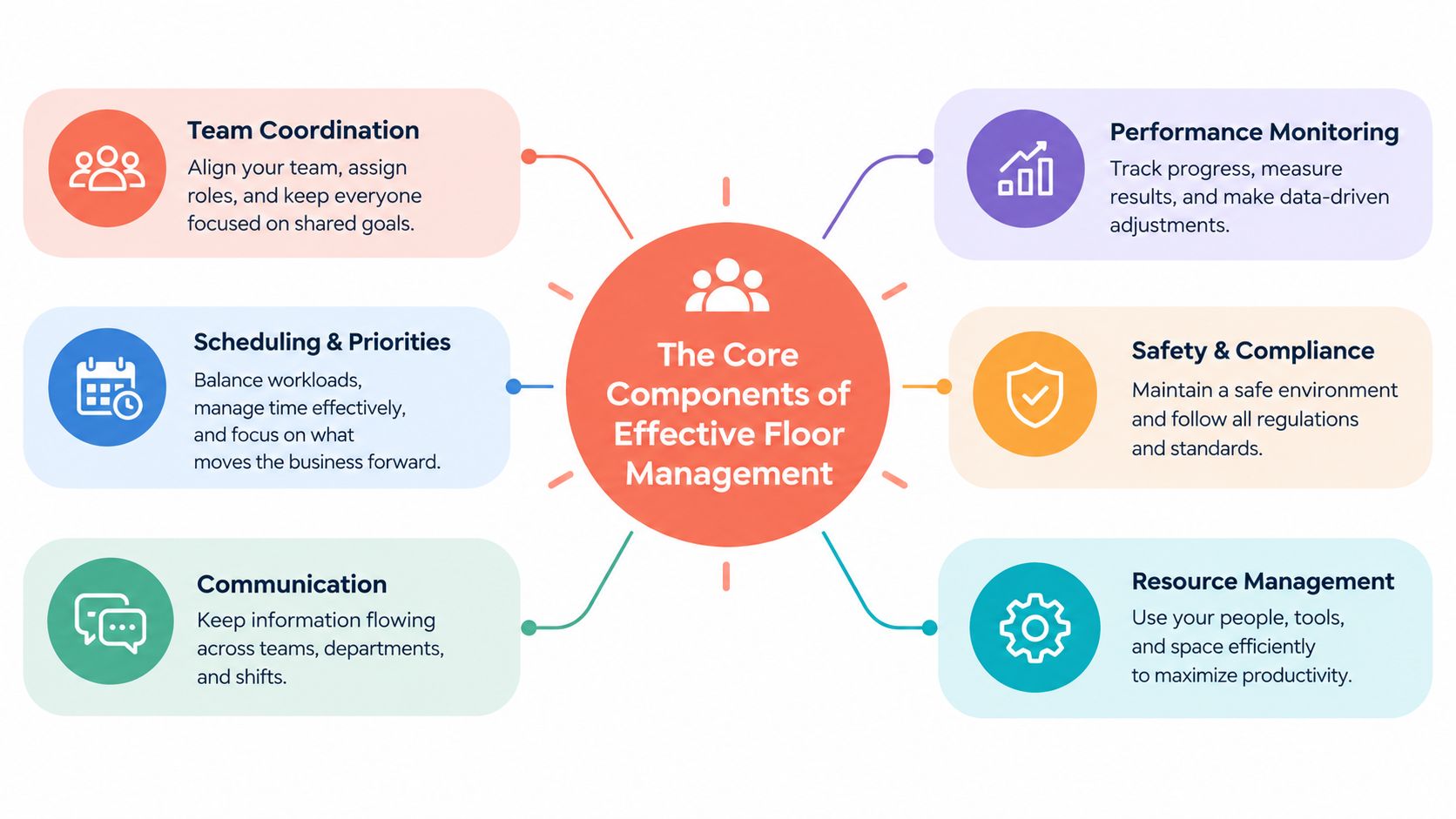
A live floor view should show reservations beside table states such as occupied, available, dessert stage, and bill requested. That visibility reduces radio calls and lets the host adapt before a delay becomes visible to guests.
The same principle applies to staffing administration. A clear process for streamline leave with LeaveWizard can help managers maintain dependable coverage, which supports floor decisions during busy services.
How to Manage Hosts, Pacing, and Walk-ins
The host is the dining room's traffic controller. The role works best when the host has one focused screen, clear authority over seating, and rules that are simple enough to follow during a rush.
Start with the reservation grid. Use 15-minute booking intervals, then cap covers in each interval according to kitchen and server capacity. An operations guide recommends staggering large parties at least 30 minutes apart to prevent several demanding tables from reaching the pass together. This reservation management guide explains the operational logic behind structured intervals and party spacing.
A practical service sequence looks like this:
- Check the live floor. Confirm which tables are available, which guests are finishing, and which tables are waiting for payment.
- Review the next interval. Identify large parties, special requirements, and bookings that need joined tables.
- Protect the kitchen. Pause or delay a seating when the incoming order wave would exceed the agreed service rhythm.
- Give walk-ins a real estimate. Avoid optimistic guesses. Offer bar seating or another suitable option when available.
- Keep the team aligned. Make the kitchen and section servers aware of walk-in arrivals and delayed seatings.
Walk-ins shouldn't be treated as interruptions. They're variable demand that can fill a suitable gap, but only when the host can see upcoming reservations and table readiness clearly. A waitlist should capture party size, contact details, seating preference, and the promised time, rather than relying on memory.
Restaurants that need a more structured approach can use a waitlist management app to keep walk-in information visible and actionable. The objective isn't to seat every party immediately. It's to make each seating at a time the restaurant can serve properly.
Traditional Methods vs Modern Technology
Paper books and spreadsheets remain familiar because they're inexpensive and easy to start with. They also separate information that needs to be viewed together. A paper book may show the reservation, while a whiteboard shows table status and a server carries the latest update about a delayed bill.
That separation creates operational lag. The host may not know a table has turned until the guests leave the entrance area. A manager may discover that several bookings share the same table only after the first party arrives. Manual systems can work in a small, predictable service, but they become fragile when bookings change, parties arrive early, or walk-ins compete for limited space.
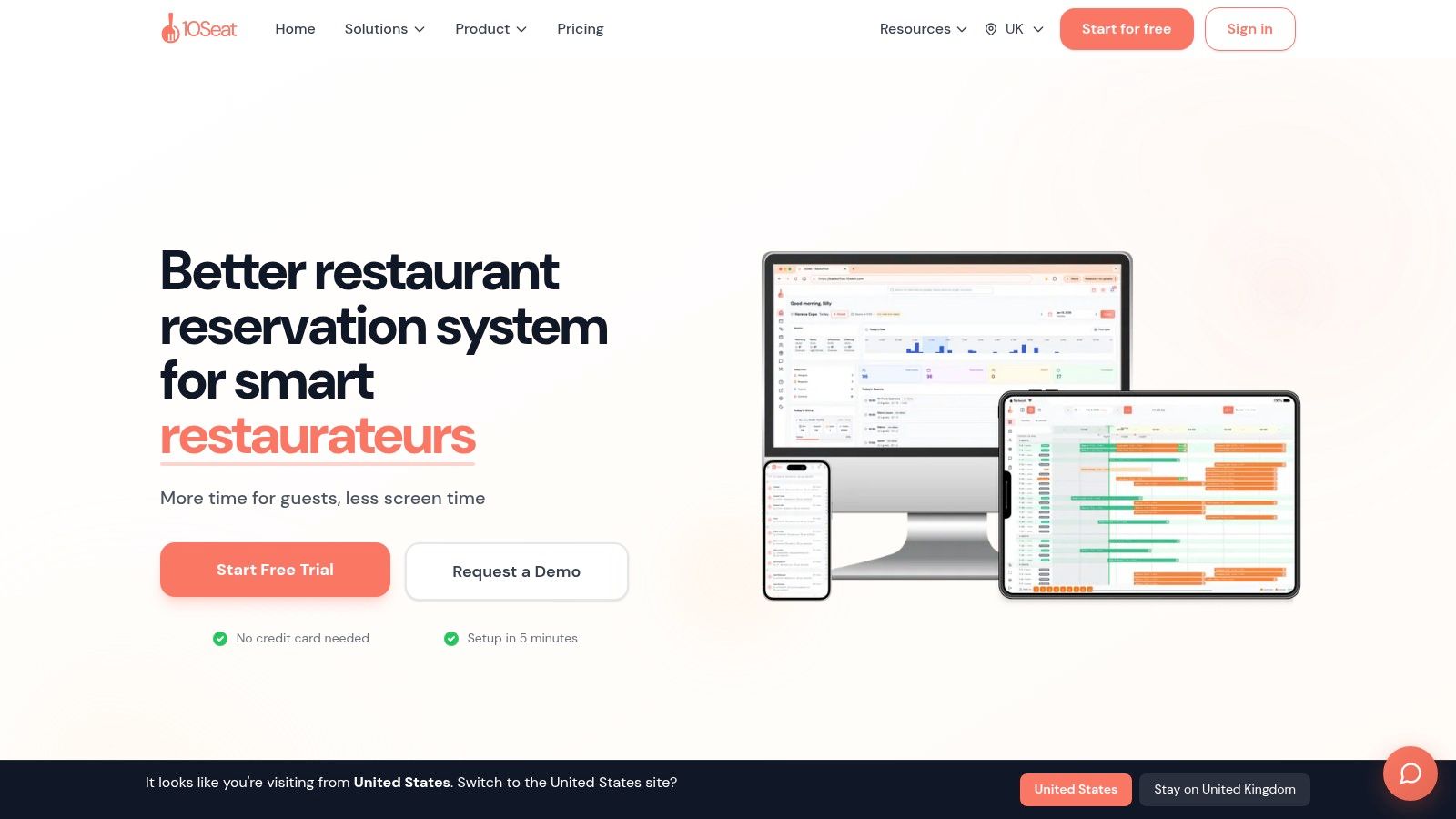
A digital floor platform should be judged by the decisions it improves, not by the number of features on its sales page.
| Operating need | Paper or spreadsheet | Integrated floor platform |
|---|---|---|
| Table visibility | Updated manually | Live status across the floor |
| Reservation changes | Written notes or messages | Centralised booking record |
| Walk-ins | Often tracked separately | Managed beside reservations |
| Table allocation | Dependent on host memory | Guided by floor rules and availability |
| Service reporting | Manual reconstruction | Recorded operating data |
Platforms such as TheFork, OpenTable, Zenchef, and Formitable use different pricing models and service structures. The relevant comparison is not just brand recognition. It's whether the model fits the restaurant's margin requirements and whether the system provides the live floor visibility the team genuinely needs. 10seat provides commission-free reservation management with reservations, table allocation, and walk-in handling in one operational view. More detail on the limitations of manual systems appears in reservation books for restaurants.
Key Metrics That Actually Move the Needle
A restaurant doesn't need a complicated dashboard to understand floor performance. Three measures usually reveal where service is leaking value: table turnover rate, average wait time, and covers per shift.
Table turnover shows how effectively the floor converts available seating into completed service. A low result can come from slow ordering, delayed payment, poor table assignment, or a kitchen bottleneck. Average wait time shows how demand feels at the entrance, but it should be read alongside the reason for the wait. A long wait caused by a late reservation party requires a different response from a long wait caused by poor pacing.
Covers per shift gives the manager a commercial view. It shouldn't be pursued in isolation. More covers can damage reviews and staff retention if the kitchen and servers can't maintain the expected experience.
Industry reporting cited by restaurant reservation operations guidance states that optimized reservation systems can produce 25% efficiency gains, shorten waits by up to 15%, and improve table turnover by up to 30% when pacing controls and waitlist automation work together. The same source describes keeping roughly 10% to 15% of seating uncommitted as a deliberate buffer against no-shows.
Track the measures after each busy service, then review them weekly:
- Turnover: Compare actual table completion with the planned service rhythm.
- Wait time: Record the promised time and the actual seating time.
- Covers: Separate reservations, walk-ins, cancellations, and no-shows.
- Capacity buffer: Check whether held tables absorbed demand or sat unused.
Other operational details matter too. A restaurant that is reviewing its back-of-house infrastructure may also benefit from guidance on commercial water filtration for Melbourne, but floor reporting should remain focused on decisions that affect seating and service flow.
Common Misconceptions and Compliance Realities
The first misconception is that floor management only matters in a high-volume restaurant. A small bistro has fewer tables, but each table represents a larger share of available capacity. One unsuitable seating decision can disrupt the entire room, especially when there's no spare section to absorb the delay.
The second misconception is that technology replaces the host. It doesn't. A system can show table status, reservation timing, and party details, but the host still interprets guest needs, handles exceptions, and communicates with the team. Technology improves the information available for the decision. It doesn't remove the need for judgement.
Belgian operators also need to connect floor operations with GKS, the Geregistreerd Kassasysteem. Belgium's current rule requires a white cash register when at least €25,000 of annual turnover comes from meals consumed on site, excluding drinks and VAT. Businesses below that threshold aren't required to use one under the stated rule. Horeca Vlaanderen's GKS guidance sets out the threshold and scope.
The GKS 2.0 rollout is scheduled to make the Blackbox, or Fiscal Data Module, mandatory for hospitality and catering businesses from July 2026, with remote access to sales data for inspectors described by GKS 2.0 information. Operators should verify the timing and obligations for their establishment before implementation.
A registered cash register system includes a cash register, a Fiscal Data Module, and a VAT Signing Card. Businesses must register the establishments where the system is used, confirm delivered component serial numbers, and link the Fiscal Data Module to the cash register system, as described in the official GKS entrepreneur guide.
Taking Control of Your Floor Tomorrow
Floor management improves when the restaurant starts with operating rules instead of buying software first. The manager should define which tables can be joined, which parties can use each section, how many covers the kitchen can absorb per interval, and when the host must pause seating.
A practical rollout can happen in stages:
- Map the room. Record every table, seat count, section, accessibility requirement, and combination.
- Set pacing limits. Cap arrivals by interval and identify the party sizes that need spacing.
- Create a walk-in policy. Define wait estimates, bar options, contact capture, and escalation rules.
- Measure the baseline. Track turnover, waits, covers, no-shows, and unused tables across busy services.
- Choose the right tool. Select a platform that gives the host a live floor view without adding unnecessary administration.
For independent restaurants, 10seat offers commission-free reservation management with live table visibility, table-aware allocation, and walk-in handling. Its restaurant reservation product can be assessed against the floor plan and service rules already used by the operation.
The payoff isn't limited to revenue. A controlled floor gives servers clearer sections, gives the kitchen a steadier arrival pattern, and gives managers fewer problems to solve in the middle of service. The dining room already contains the available capacity. Better decisions help the restaurant use it without adding tables.
10seat gives independent restaurants a commission-free way to manage reservations, table allocation, and walk-ins from a live floor view. Visit 10Seat to see how a clearer seating and pacing system can turn busy services into more controlled, profitable operations.