Customer Profiling and Segmentation for Restaurants
Customer profiling and segmentation for independent restaurants: six guest groups, the second-visit drop-off, and what to record before service.
Regulars make up a minority of most guest books, yet they generate a disproportionate share of restaurant revenue. That is a stronger reason to improve the guest book than any promise of more advanced marketing. For an independent restaurant, customer profiling and segmentation should help the team turn a first visit into a second, not collect personal details nobody can use at the table.
Table of Contents
- Why Most Guests Never Come Back
- Six Guest Groups and What to Do
- What Belongs in a Guest Profile
- How to Score Visits Without a Data Team
- Personal Service Guests Still Trust
- One Saturday in a 48-Seat Room
- Start the Guest Book This Week
Why Most Guests Never Come Back
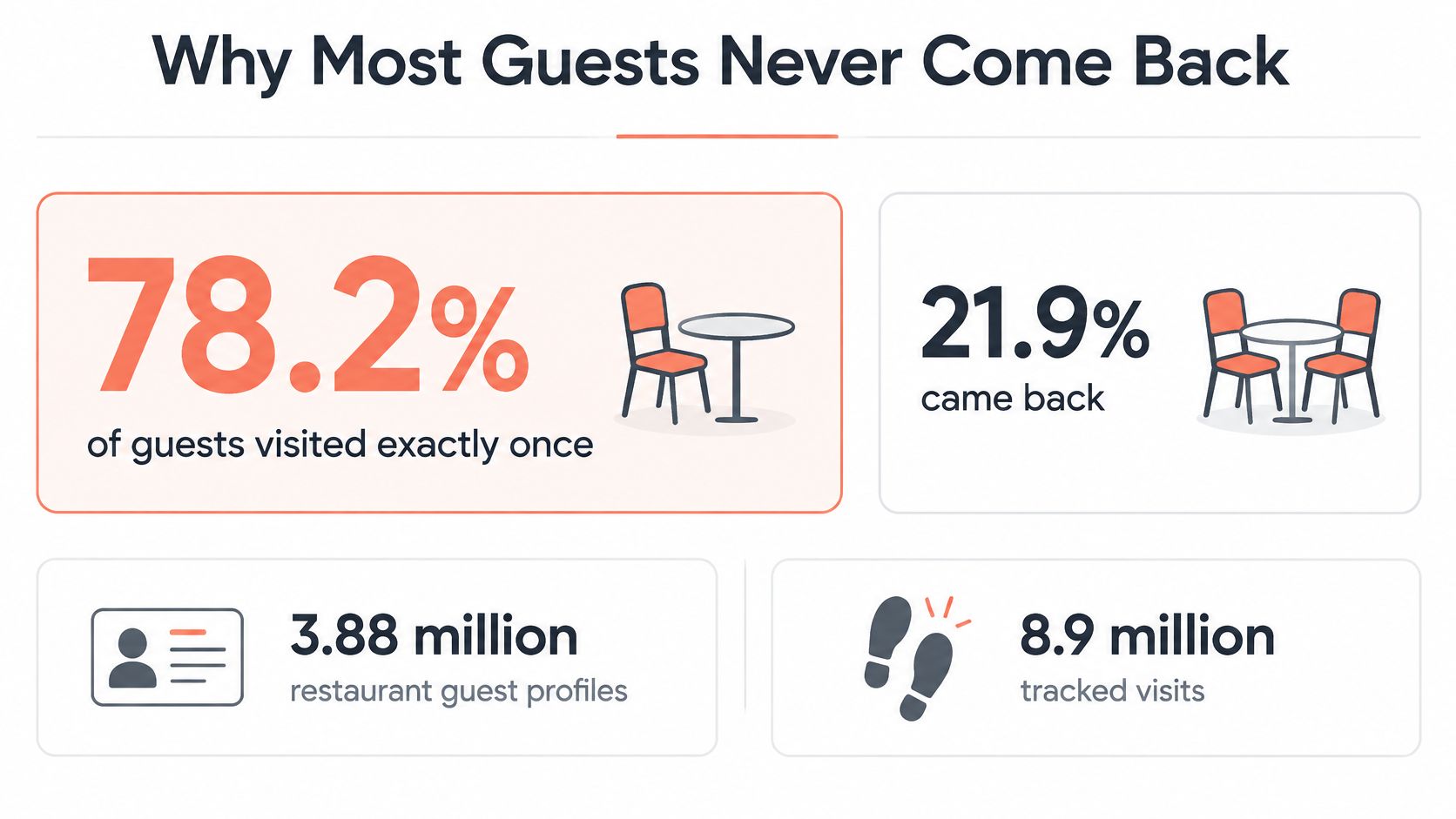
A full reservation book can still mean a dining room full of strangers. Across 3.88 million restaurant guest profiles and 8.9 million tracked visits, 78.2% of guests visited exactly once, according to Bloom Intelligence's restaurant segmentation analysis. The same analysis reported that 21.9% made a second visit, while 54.8% of guests who reached a second visit made a third.
Those figures describe the tracked dataset, not every restaurant. They also don't explain why an individual guest stayed away. But they identify a clear operating priority: turning the first visit into a second deserves deliberate attention.
The gap is easier to see than it is to notice during service.
A Profile Records the Guest, a Segment Sets the Action
A customer profile is the file attached to an individual guest. It holds visit history, party size, booking channel, declared preferences, allergies, and relevant occasions.
A customer segment groups profiles whose next action should be similar. A first-time diner might need a relevant return invitation. An established regular needs recognition, not another introduction to the restaurant.
A segment earns its place only when it changes something the team does.
The host doesn't need a personality portrait during a busy arrival period. The useful distinction is whether the party needs an introduction, a familiar welcome, or confirmation of an existing request.
Treat Departure as a Handover
The first visit shouldn't disappear into yesterday's reservations. Before closing the booking, the team should capture what would make a return easier: the requested seating, a dish worth mentioning again, or an occasion the guest volunteered.
That doesn't mean sending every departing guest a promotion. It means assigning responsibility for an appropriate next step and checking whether another completed visit follows.
A practical restaurant customer loyalty approach starts with that handover. Acquisition gets the guest through the door. Consistent service and a relevant reason to return give the restaurant something worth measuring afterward.
Six Guest Groups and What to Do
Restaurant guest groups and the next action
| Group | How the team spots them | Benchmark | One next action |
|---|---|---|---|
| First-time guests | One completed visit on file | 78.2% of guests in the large restaurant dataset | Record party size, occasion, and one stated preference before departure |
| Second-visit prospects | Came once and haven't returned inside the restaurant's window | Only 21.9% make a second visit | Send one specific invitation tied to what they ate or celebrated |
| Established guests | Two or more completed visits | 54.8% of second-timers make a third visit | Repeat the table, daypart, or dish that already worked |
| High-value regulars | Recent, frequent, and higher spend in a fixed window | Assess their share of sales in the restaurant's own book | Protect the usual table where possible and note the next occasion |
| Lapsed guests | A real habit, followed by a long gap | Set the gap from the restaurant's own booking history | Send one low-cost invitation, then stop |
| Occasion and large parties | A celebration or large party the guest declared | Separate from visit frequency | Confirm allergies, timing, and expectations before the shift |
Use the Labels Before Service
The benchmark entries describe the restaurant dataset discussed above. They aren't targets for an individual venue, and the operational groups aren't mutually exclusive.
First-time guests and second-visit prospects can be the same people at different moments. During service, the task is to deliver the meal and capture a useful preference. After departure, the task becomes deciding whether an appropriate return invitation exists.
Established guests shouldn't have to explain the same preference at every arrival. If a guest previously requested the quieter lunch sitting, the host can acknowledge that request without promising a table that hasn't been reserved.
High-value regulars need recognition, not permission to disrupt service. Protecting a preferred table means planning availability, not moving another confirmed party. The manager still owns seating fairness, kitchen pacing, and recovery when plans change.
Lapsed guests need a definition that fits the venue. A long silence from a habitual weekday diner means something different from a gap between annual celebration meals. Staff should inspect the previous pattern before treating an absence as a problem.
Keep Occasion Information Separate
An occasion flag can sit alongside any visit-history group. A regular bringing a large anniversary party still needs a different briefing from the same regular arriving for lunch.
Before the shift, the manager should check:
- The purpose: What did the guest say the meal was for?
- The practical requirements: Are arrival timing, dietary needs, and seating expectations confirmed?
- The owner: Which staff member will handle questions or changes?
- The next action: Is recognition enough, or is a follow-up appropriate?
Age, job title, and postcode don't deserve extra groups unless they support a specific, legitimate decision. A busy host needs service instructions, not demographic labels.
These groups are working labels, not personalities. A guest can move between them, and the manager should be able to explain every label without referring to an opaque score.
What Belongs in a Guest Profile
A useful guest profile is short enough for a host to scan before approaching the door. The file should distinguish what happened, what the guest said, and what still needs confirmation.
A corner-table booking is history. A request for a corner table is a declared preference. Treating those as identical turns a reasonable observation into an unsupported claim.
What a host profile holds
| Block | Record | Example | Leave out |
|---|---|---|---|
| Identity and history | Name, phone or email the guest supplied, visit dates, party size, booking channel, no-show and cancellation marks | Phone booking, family party, previous cancellation recorded | A guessed address or social profile |
| Stated preferences | Seating, pace, dishes requested again, and preferred greeting | Quiet corner, natural wine the guest named | A taste inferred from a social feed |
| Safety facts | Guest-confirmed allergies and dietary needs, with date and staff source | Nut allergy, dated confirmation recorded by the host | An assumed allergy with no source |
| Occasion context | Birthday, anniversary, business meal, quiet night, or an expectation written at booking | Anniversary, requested a quiet table | Age, job, or postcode |
Write Notes Another Host Can Use
A note such as “likes good service” adds nothing. “Requested a slower pace between courses” tells the floor manager what to confirm and coordinate.
Keep subjective judgments out of the file. “Difficult guest” doesn't explain whether the previous problem concerned a delayed course, an incorrect bill, or a complaint about noise. Record the event and the agreed resolution instead.
The same discipline applies to cancellation history. Staff should distinguish a cancelled reservation from a completed visit and avoid turning an isolated incident into a permanent character assessment.
For allergies and dietary requirements, include the source and confirmation date. An old note should prompt a conversation, not replace one.
Give Sensitive Notes an Owner
The manager should decide who can edit safety-related information and who needs access during service. A booking note can alert the team, but the responsible staff member must confirm what applies to the current meal before communicating with the kitchen.
Corrections should replace misleading information, not sit underneath it as another contradictory paragraph. Otherwise, the next host has to interpret a conversation instead of reading a clear instruction.
Collection test: If a field doesn't change seating, the kitchen ticket, the greeting, service pacing, or a permitted follow-up, leave it out.
That rule keeps the profile useful. It also prevents the guest book from becoming a store of personal information that nobody has time to maintain.
How to Score Visits Without a Data Team
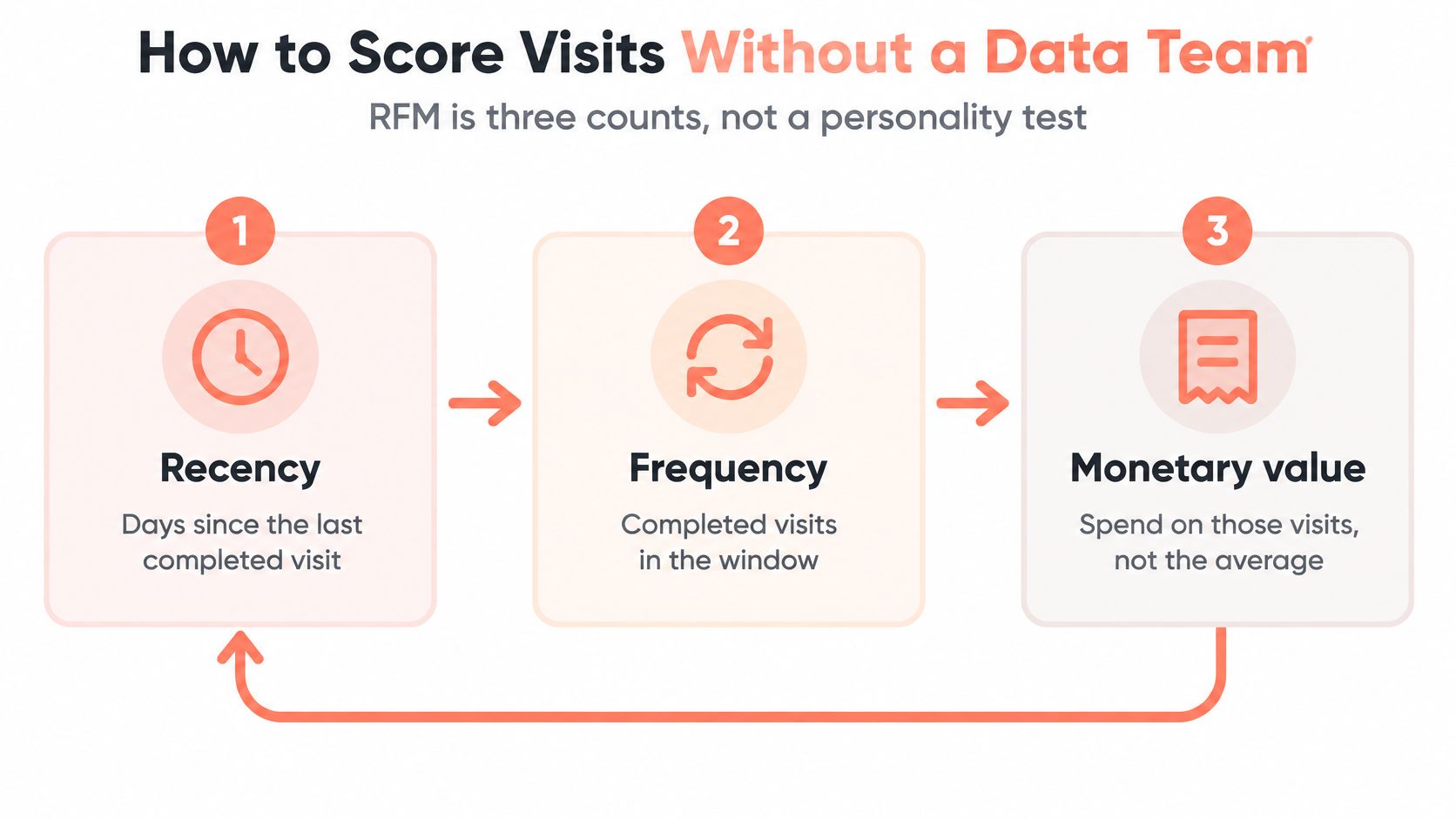
RFM means recency, frequency, and monetary value. Recency measures time since the last completed visit, frequency counts completed visits within a defined period, and monetary value totals spending within that period rather than averaging the bill, as described in the ACM publication on RFM segmentation.
The distinction matters: an expensive celebration can indicate valuable business without demonstrating a recurring dining habit.
The method starts with these separate measures.
Keep the Calculation Simple
- Export completed visits. Keep cancellations and no-shows as separate operational marks. Check duplicate profiles before counting loyalty.
- Fix the observation window. As a practical starting choice, a busy brasserie might test a 90-day window and a quieter dining room a 180-day window. Apply the chosen window consistently.
- Rank guests into readable bands. Recent, frequent, and higher-spending bands are enough to begin. A spreadsheet doesn't need a clustering model to identify a regular.
- Assign a service action. Translate the bands into the guest groups already used by the floor team. A score without an action is administrative work.
- Refresh monthly. Recalculate rather than preserving a permanent high-value label. Review whether the resulting groups generate useful bookings and profitable covers.
RFM counts for a restaurant book
| Count | What gets measured | Practical window | Mistake to avoid |
|---|---|---|---|
| Recency | Days since the last seated, completed visit | Measured at the same review date for every guest | Counting a cancellation as a visit |
| Frequency | Completed visits inside the window | Same window for every guest | Treating a no-show as loyalty |
| Monetary | Till spend on completed visits, not the average ticket | Same window, reconciled to the registered till | Letting a celebration masquerade as a habit |
Use Benchmarks as Warnings, Not Forecasts
In a published RFM project using 541,909 transactions, four clusters remained stable across resampled datasets; 16% of customers labelled Champions generated 64.7% of revenue, while 37% labelled Hibernating generated 6.3%.
That's a transaction benchmark, not a restaurant profit forecast. Its practical lesson is to check whether staff time and incentives match guest value rather than giving every inactive contact the same offer.
Useful restaurant data analytics should connect these bands to completed bookings, additional covers, and contribution after campaign costs.
This walkthrough provides another way to approach the calculation.
Keep Belgian GKS Records Separate
For Belgian operations, keep GKS, the Geregistreerd Kassasysteem, compliance within the fiscal workflow. Where the restaurant uses a registered till, take spending figures from its recorded transactions rather than reconstructing revenue from reservation notes.
The segmentation spreadsheet is an analytical copy, not a substitute fiscal record. Keep guest preferences separate from receipts, reconcile refunds consistently, and have the accountant confirm the restaurant's applicable GKS obligations.
Personal Service Guests Still Trust
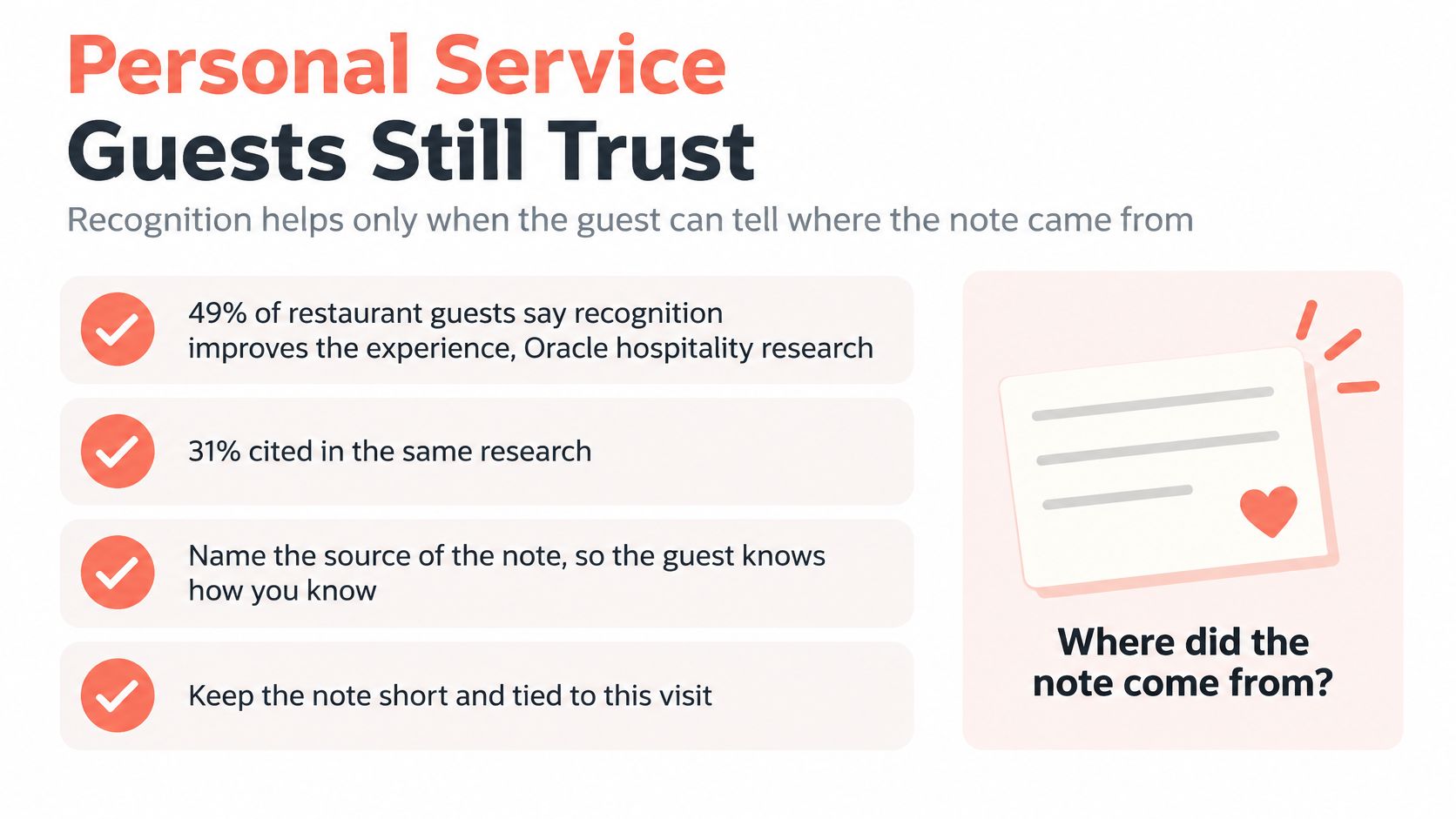
Recognition and surveillance aren't the same thing. In Oracle hospitality research, 49% of restaurant guests said recognition improved their experience, while 68% considered recommendations based on digital-footprint information invasive.
The boundary is practical: a restaurant can remember a request made at booking without searching elsewhere for more personal information. More collection doesn't automatically produce better hospitality.
A useful note should have an explanation the guest would recognize.
Separate Hospitality From Marketing
Hospitality notes support the booked meal. They help staff handle seating, accessibility requests, dietary requirements, and the occasion being celebrated.
Marketing is a separate use. A guest providing contact details to manage a reservation hasn't necessarily agreed to promotional messages. The restaurant should maintain an appropriate permission process, a clear opt-out, and a retention policy staff can explain.
The manager should establish a simple boundary:
- Booking information: Collect what's necessary to arrange and deliver the visit.
- Marketing permission: Record the guest's separate choice and honor withdrawals.
- Retention: Set a justified review and deletion schedule instead of keeping inactive profiles indefinitely.
- Access: Limit sensitive information to staff who need it for their work.
Keeping an exported copy forever isn't meaningful deletion. Any archive or export still needs a defined purpose and appropriate handling.
Confirm Before Acting
A discreet confirmation sounds like hospitality: “The booking mentions a nut allergy. Can the manager confirm the requirements before ordering?” Announcing an old medical detail across the reception desk doesn't.
Complaints also need human judgment. A previous recovery note should help the manager understand what happened, not encourage staff to approach the table defensively.
10Seat is fully GDPR compliant. That's the baseline for handling customer data, not a substitute for a restaurant's own decisions about collection, access, and use.
Trust rule: Staff should be able to explain where a note came from and why it matters to the current visit.
Thoughtful personalized dining experiences rely on that clarity. If the team can't explain why it holds a field, the manager should remove it rather than invent a future marketing use.
One Saturday in a 48-Seat Room
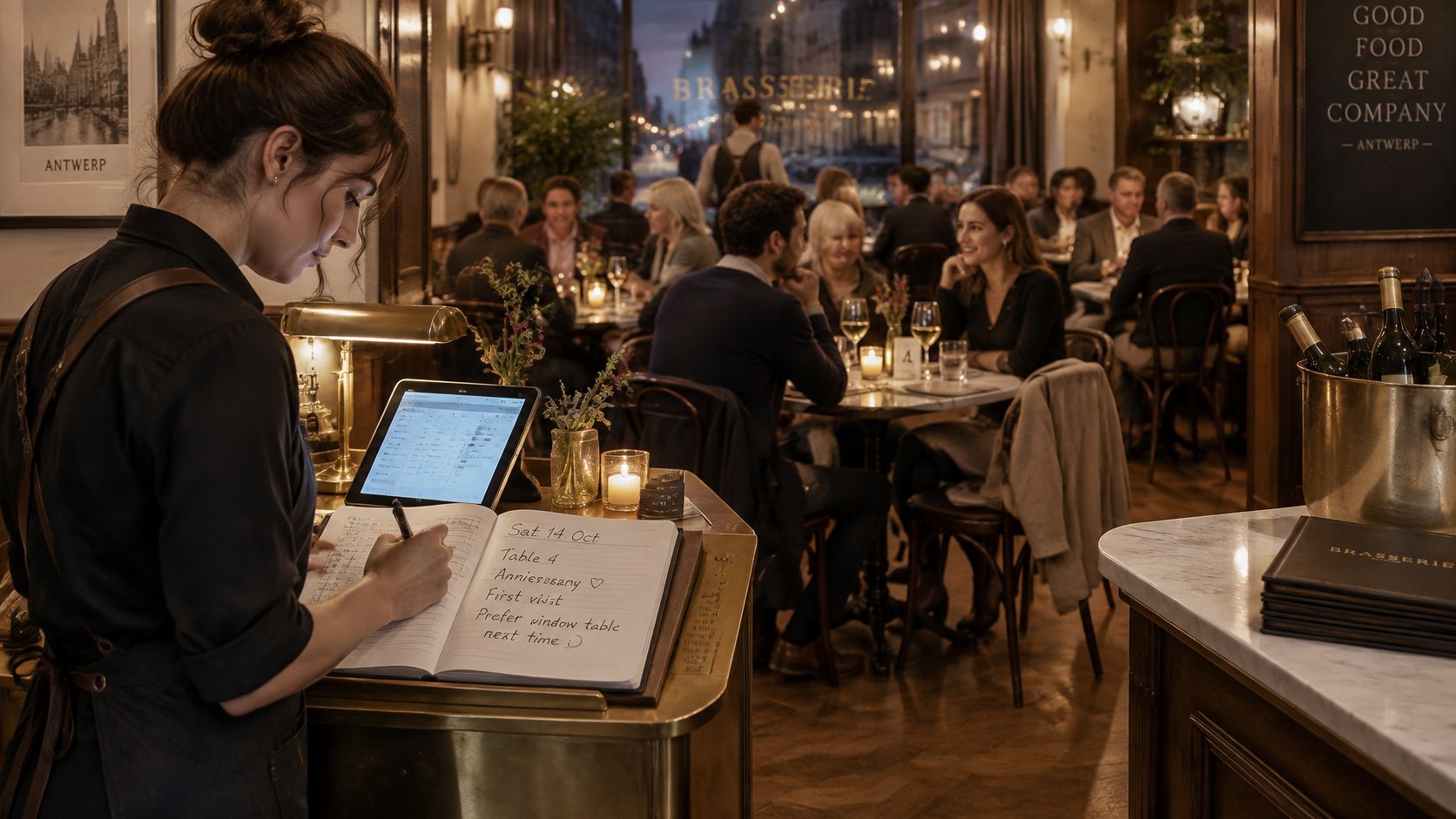
Consider a hypothetical 48-seat brasserie in Antwerp running two turns on Saturday. The manager's pre-shift briefing focuses on the reservations requiring a specific action, not a recital of every profile in the book.
Table 4 is a couple visiting for the first time. Their booking mentions an anniversary and asks for a quiet corner, so the host checks that the seating plan matches the request before arrival.
Table 7 is a familiar Tuesday regular visiting on a different evening. The window preference is already recorded, but the host confirms the available arrangement rather than assuming the usual seat can be guaranteed.
These are the kinds of details worth recording where the next shift can find them.
Handle the Risk Before the Ticket
Table 12 is a family whose booking form includes a nut allergy. The manager confirms the requirement with the party and follows the kitchen's allergy procedure before the order goes through.
A previously frequent party that stopped booking isn't tonight's service problem. Its invitation belongs in a quiet administrative period, not between arrivals and the pass.
On Monday, the anniversary couple can receive a specific return invitation if marketing permission allows it. The regular needs the profile updated only if something changed. The lapsed party gets a relevant weekday suggestion, with no repeated chasing if it goes unanswered.
Make the Revenue Estimate Honest
For a hypothetical financial illustration, suppose a month brings 200 first-time booking parties, the baseline second-booking rate is assumed to be 21.9%, and a test aims for 30%. The difference is about 16 additional returning parties.
At an assumed €90 per returning table, that produces approximately €1,440 in additional gross revenue. Those are scenario assumptions, not a forecast or a measured return on investment.
The distinction between guests and parties matters. Multiplying individual diners by a table bill would overstate the result, so the scenario uses booking parties consistently.
The manager should also deduct discounts, message costs, food costs, and additional labor before calling the result profit. Where practical, comparable eligible guests should receive no invitation so the restaurant can estimate how many returns would have happened anyway.
The useful outcome isn't a larger contact database. It's a completed return visit that contributes to the business, supported by notes the dining-room team can trust.
Start the Guest Book This Week
Decide the handover before choosing software. The owner-chef or GM should name who updates profiles, who approves a return invitation, and who checks that the host can see service details before the first seating.
The money is in the second visit: guest-declared notes and visit patterns give the team enough to recognize a returning party without collecting data the table cannot use. A long field list will not fix an unclear shift routine. Start with recognizable guests and upcoming reservations, keep only details the dining room can act on, and correct records while the team works.
This Week's Working Checklist
- Choose the window: Use a consistent review period matched to the restaurant's normal return pattern.
- Assign the groups: Mark completed visits accurately and separate first-time parties from regulars and lapsed guests.
- Name the owner: Give one specific person responsibility for follow-up and profile corrections.
- Brief the floor: Put allergies, occasions, seating requests, and table-ready messaging where the host and manager can access them.
- Review the outcome: Count completed return visits and contribution, not just message opens.
The test is whether Saturday's team can act without searching through separate notebooks, inboxes, and spreadsheets. If staff still have to ask the previous shift what a note means, rewrite the record in plainer service language: “window table,” “nut allergy,” “prefers quiet corner,” “celebrated anniversary last March.”
Put Notes and Messages in the Same Workflow
10Seat's guest-management tools keep preferences, visit history, and communication history on the customer profile. The guest book builds automatically over time, remembering preferences, allergies, special occasions, and regulars; guest notes give the next host usable context.
Guest messaging lets restaurants contact guests before and after a visit, clarify requests, and notify them when a table is ready, reducing phone calls during service. The 10Seat product overview provides a practical starting point for assessing that workflow.
Setup takes about five minutes, no credit card is required to start, and the On the House plan covers up to 50 covers. A demo is available, and customers who cancel can export all their data.
The restaurant still owns the hospitality decisions. The useful starting point is an accurate visit record, a relevant second-visit invitation, and a note the next host will not need to interpret.
10Seat offers reservation management, guest profiles, and guest messaging for independent restaurants. Visit 10Seat to request a demo or get started, then put the next second-visit invitation and the next pre-shift briefing into the same workflow.